
Best Dehumidifier for Mould UK 2026 — Tested and Ranked
Last updated: 19 May 2026
Affiliate disclosure: This site contains affiliate links. If you buy through them I may earn a small commission at no extra cost to you. This never affects which products I recommend.
Introduction
If you’re searching for the best dehumidifier for mould UK homes can get, you’re probably dealing with more than an eyesore. It is a genuine health hazard. The NHS links prolonged mould exposure to respiratory infections, worsening asthma, and allergic reactions — and UK homes are particularly vulnerable. Older housing stock, poor ventilation, and a damp climate mean that millions of British households deal with mould on walls, window frames, and ceilings every winter.
The most effective way to prevent mould is to control humidity. When indoor relative humidity stays below 60%, mould spores cannot take hold — and a good dehumidifier is the most reliable tool for doing exactly that.
In this guide I have ranked the best dehumidifiers for mould in the UK, covering the best overall pick, the best budget option, the best bedroom model, and the best desiccant unit for cold rooms. I have also included a buying guide so you can choose the right capacity and type for your home.
Quick Answer — Best Dehumidifiers for Mould UK at a Glance
| Pick | Model | Why |
| Best Overall | Meaco 20L Low Energy | Powerful, quiet, and energy-efficient for most UK homes |
| Best Budget | Pro Breeze 12L | Solid performance under £100 |
| Best for Bedrooms | Meaco MeacoDry ABC 12L | Near-silent operation, compact design |
| Best Desiccant | Meaco DD8L Junior | Works effectively in cold rooms where compressor models struggle |
1. Best Overall — Meaco 20L Low Energy Dehumidifier
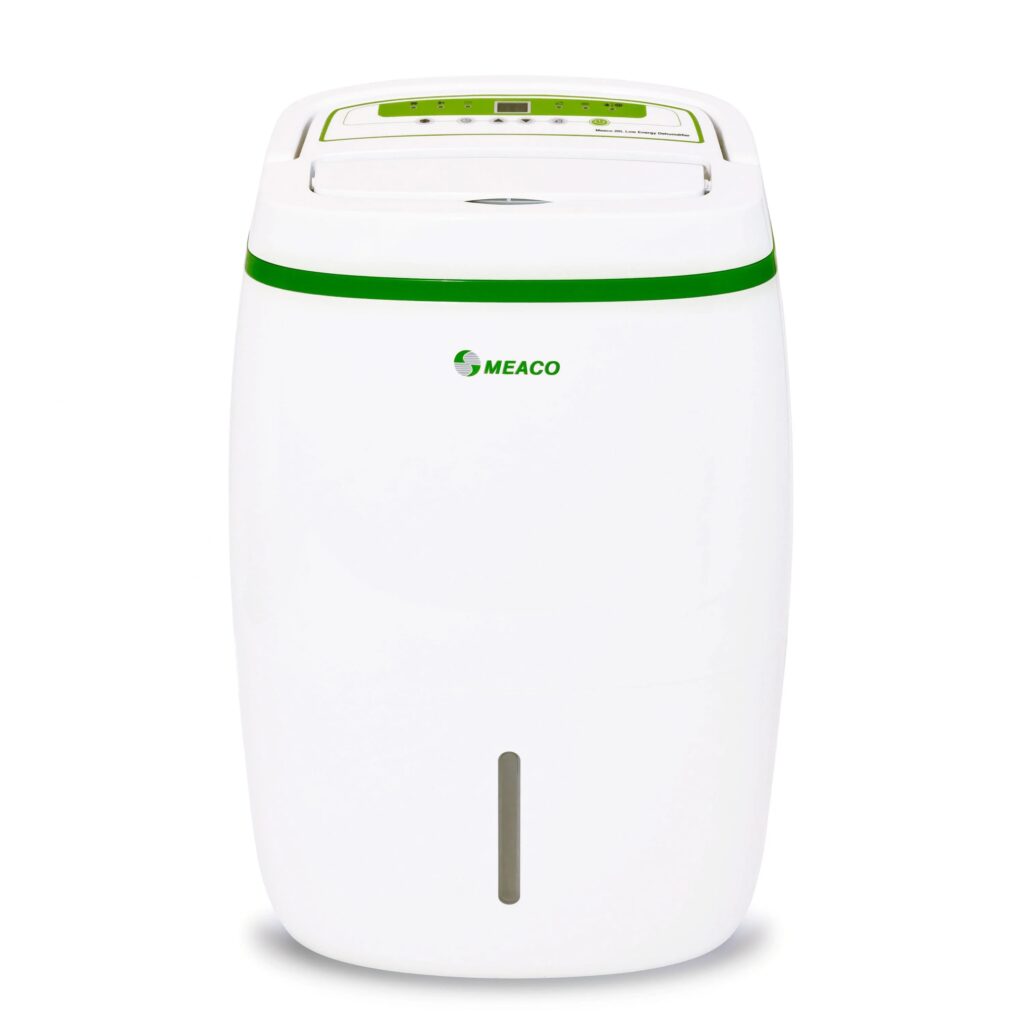
Best for: Medium to large UK homes dealing with persistent damp, condensation, and mould risk.
Key Specs
- Extraction rate: 20 litres per day
- Coverage: Up to 64m²
- Noise level: 37–41 dB (quiet enough for living spaces)
- Tank capacity: 5 litres
- Energy use: Approx. 300W — among the most efficient at this capacity
- Running cost: Roughly £9–11/month at average UK energy prices
- Warranty: 2 years (extendable to 5 years when registered)
Why It Tops the List
The Meaco 20L has earned its reputation as the go-to dehumidifier for UK homes and it is easy to see why. It extracts moisture efficiently at normal UK room temperatures (10–20°C), which is where many compressor dehumidifiers start to underperform. It has a continuous drainage option so you do not need to empty the tank manually, a laundry mode for drying clothes indoors without creating mould-feeding humidity, and a humidistat that lets you set a target level and leave it to run automatically.
Crucially for mould control, it keeps running until your room hits the humidity level you set — typically 50–55% — then switches to standby. That automation means it works even when you forget about it.
Pros
- Excellent energy efficiency for the extraction rate
- Very quiet for a 20L unit
- Continuous drain option
- Humidistat with auto shut-off
- Strong track record and UK customer support
Cons
- Higher upfront cost than budget options
- Slightly bulky for small flats
Price
Around £220–£250 from Amazon UK and major retailers.
→ https://amzn.to/4eVZi3W (affiliate link)
2. Best Budget — Pro Breeze 12L Dehumidifier
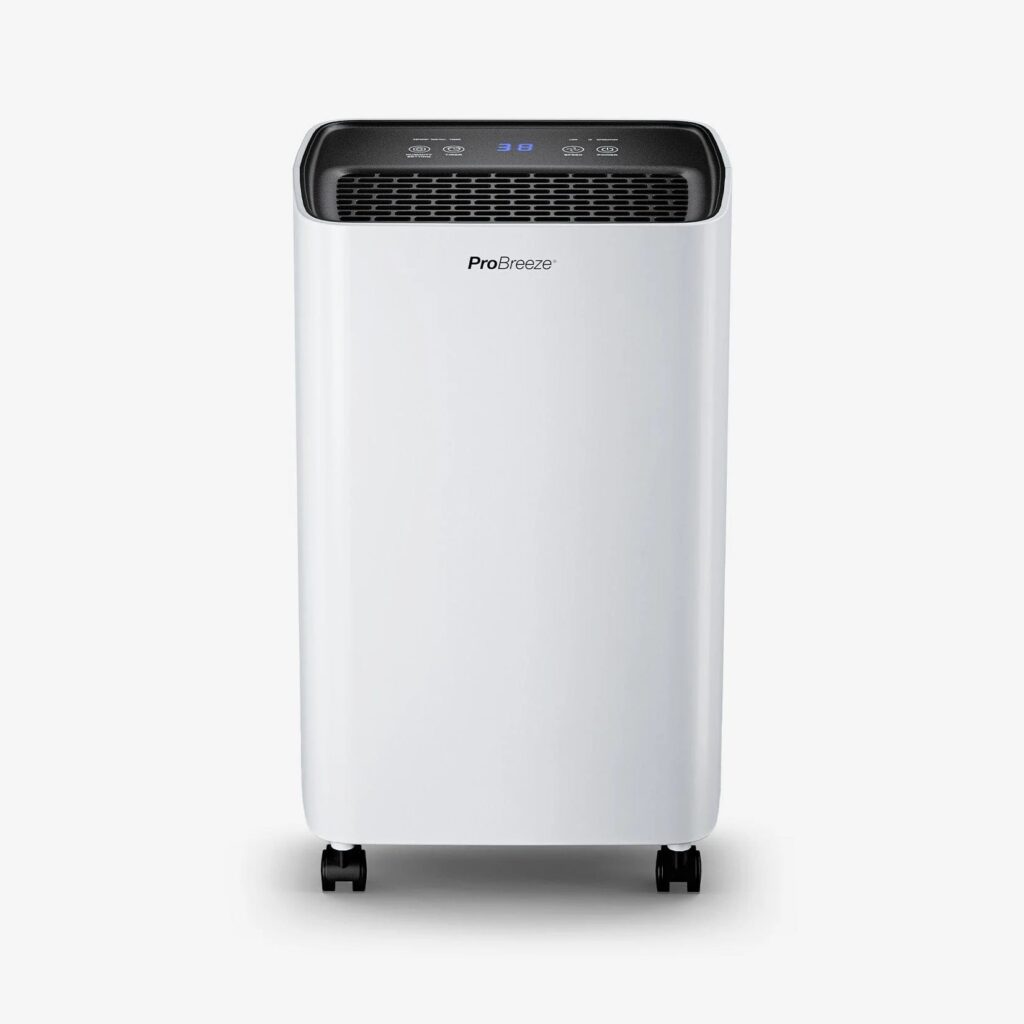
Best for: Smaller homes, single rooms, or anyone wanting effective mould control without spending over £100.
Key Specs
- Extraction rate: 12 litres per day
- Coverage: Up to 40m²
- Noise level: 44 dB
- Tank capacity: 2 litres
- Energy use: Approx. 200W
- Running cost: Roughly £6–7/month
Why It Is the Best Budget Pick
The Pro Breeze 12L punches well above its price point. It handles condensation and elevated humidity reliably in rooms up to a medium-sized living room or two connected bedrooms. It has a built-in humidistat, auto shut-off when the tank is full, and a continuous drain port — features you would not necessarily expect at this price.
It is louder than the Meaco models and the 2-litre tank fills quickly in very damp rooms, meaning more frequent emptying. But for anyone who wants to tackle a mould problem in a specific room without spending over £100, it does the job.
Pros
- Well under £100
- Humidistat and auto shut-off included
- Continuous drain option
- Compact and easy to move
Cons
- Smaller tank needs more frequent emptying in very damp spaces
- Noisier than premium models
- Not ideal for large open-plan areas
Price
Around £70–£90 depending on retailer.
→ https://amzn.to/49qhfE4 (affiliate link)
3. Best for Bedrooms — Meaco MeacoDry Abc 12L Compressor Dehumidifier
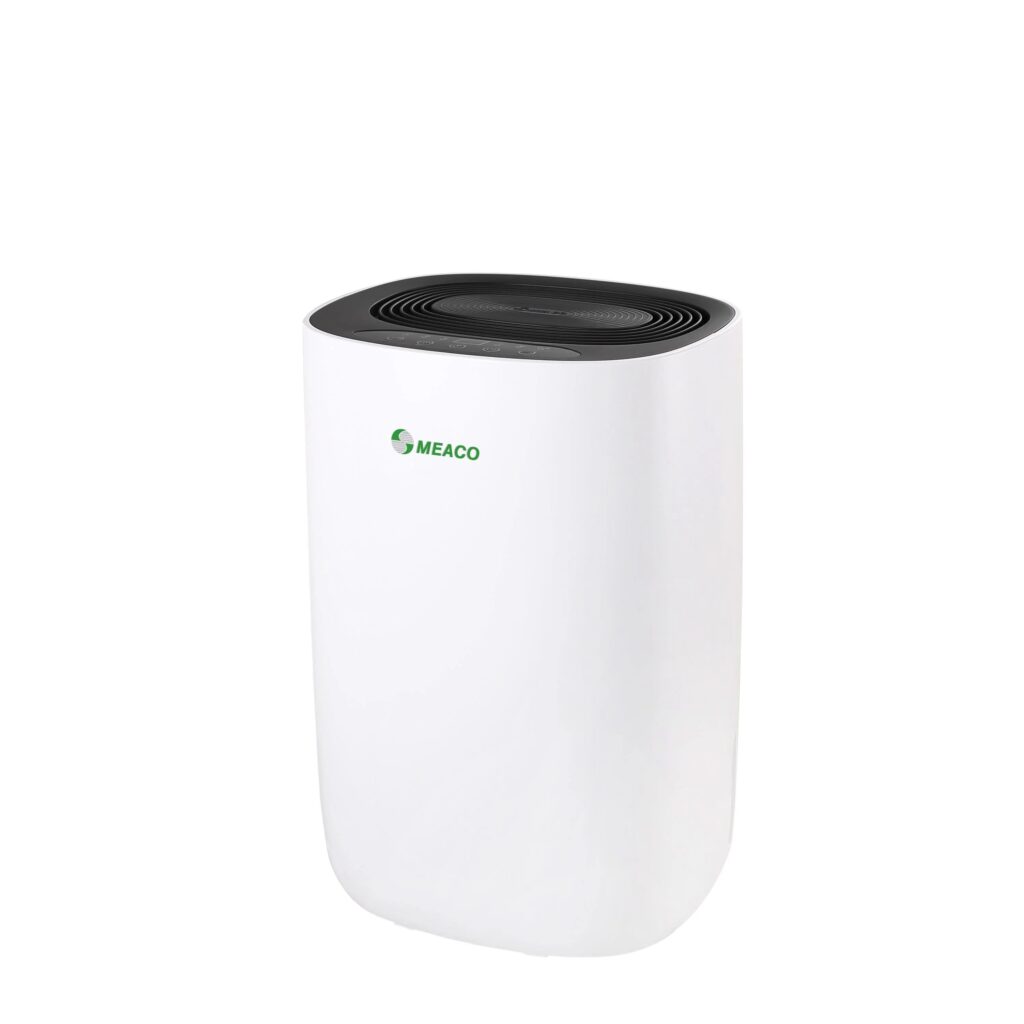
Best for: Anyone who needs a dehumidifier running overnight in a bedroom without being disturbed.
Key Specs
- Extraction rate: 12 litres per day
- Coverage: Up to 35m²
- Noise level: 34 dB on low setting — one of the quietest available
- Tank capacity: 2 litres
- Energy use: Approx. 165W
- Running cost: Roughly £5/month
Why It Wins for Bedrooms
The bedroom is actually one of the most important rooms to control humidity. We breathe out significant moisture during sleep, and closed doors overnight trap it — creating ideal mould conditions on walls and window frames.
The MeacoDry Abc’s standout feature is its noise level. At 34 dB on its lowest setting, it is quieter than a whisper in a library. It also has a sleep mode that dims all display lights, so it will not disturb you at night. Despite its quiet operation it extracts effectively at normal room temperatures, and the humidistat keeps it running only when needed.
Pros
- Exceptionally quiet — ideal for bedrooms
- Sleep mode with dimmed display
- Energy efficient
- Compact footprint
Cons
- Smaller coverage area — not for large rooms
- Tank needs regular emptying if the room is very humid
- Not suitable for cold rooms below 10°C (use a desiccant model instead)
Price
Around £130–£150.
→ https://amzn.to/48AGOCg (affiliate link)
4. Best Desiccant — Meaco DD8L Junior Desiccant Dehumidifier
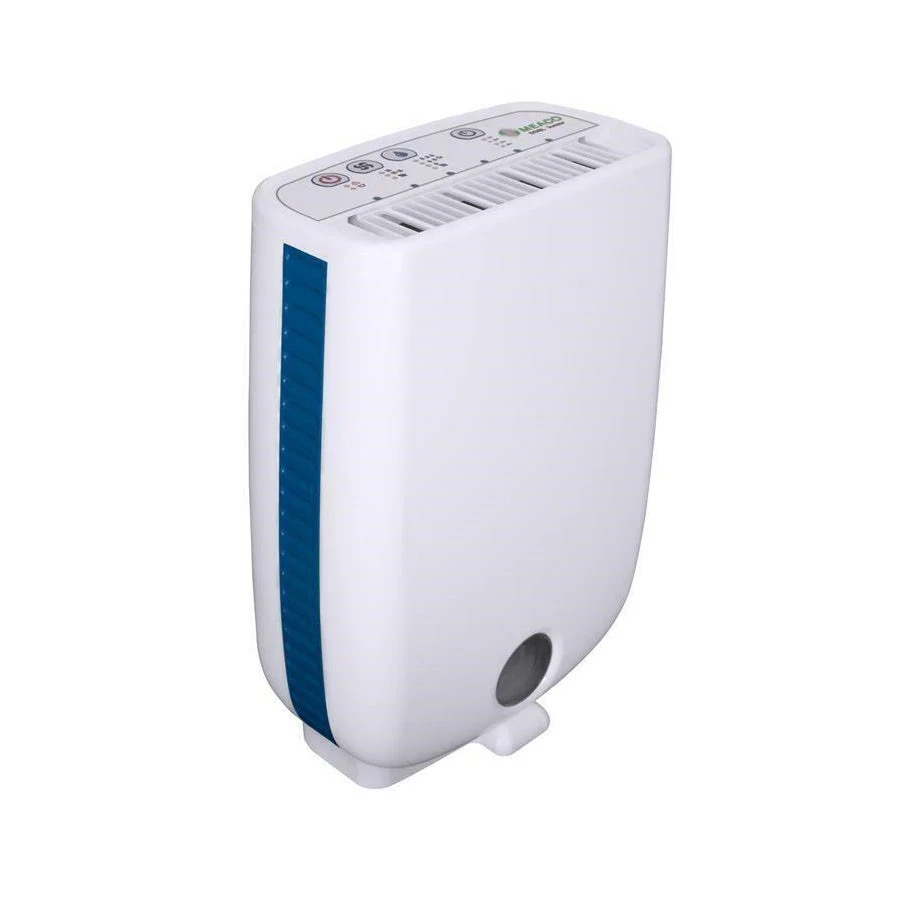
Best for: Cold rooms, garages, conservatories, caravans, or any unheated space where compressor dehumidifiers lose effectiveness.
Key Specs
- Extraction rate: 8 litres per day (at 20°C / 60% RH)
- Coverage: Up to 3-bed home (as a portable unit)
- Noise level: 39 dB
- Tank capacity: 2 litres
- Energy use: Approx. 650W (desiccant units use more energy by nature)
- Running cost: Roughly £18–22/month if run continuously
Why Desiccant Matters for UK Homes
Here is the problem most dehumidifier guides gloss over. Compressor dehumidifiers — which cover most of the market — work by cooling air over refrigerant coils. Below about 15°C, their efficiency drops significantly. Below 10°C they can ice up and stop working altogether.
In a UK winter, this is a real issue. Unheated rooms, garages, conservatories, and even bedrooms in older homes can sit well below 15°C. In these conditions, a desiccant dehumidifier is the right tool. It uses a silica gel rotor to absorb moisture from the air regardless of temperature, and also exhausts slightly warm air — a bonus in a cold room.
The DD8L Junior is the most popular desiccant unit in the UK for good reason. It is compact for a desiccant model, reliable, and effective down to 1°C.
Pros
- Works effectively in cold rooms — down to 1°C
- Lightweight and portable
- Slightly warms the room as it runs
- Reliable long-term track record in UK market
Cons
- Higher energy consumption than compressor models
- Not the best choice for warm, well-heated living spaces
- Smaller tank
Price
Around £120–£140.
→ https://amzn.to/4w5fJkN (affiliate link)
Buying Guide — How to Choose the Right Dehumidifier for Mould
Desiccant vs Compressor: Which Do You Need?
This is the most important decision and most buyers get it wrong.
Compressor dehumidifiers are the most common type. They work by pulling air over cold refrigerant coils, which causes moisture to condense and drip into the tank. They are energy-efficient and effective in warm rooms. The catch is that their efficiency drops sharply below 15°C. If your problem room is a heated living space or bedroom, a compressor model is the right choice.
Desiccant dehumidifiers use a rotating wheel coated in silica gel to absorb moisture chemically from the air. They work at any temperature, use more electricity, and warm the air slightly as they exhaust. If your problem is in a cold garage, conservatory, loft, caravan, or unheated bedroom, a desiccant model is what you need — a compressor unit simply will not perform well enough.
The easy rule: if the room stays above 15°C, buy a compressor. If it regularly drops below 15°C, buy a desiccant.
What Litre Capacity Do You Need?
Dehumidifier capacity is measured in litres extracted per day at a standard test condition (usually 20°C and 60–80% relative humidity). Here is a practical guide for UK homes:
| Situation | Recommended Capacity |
| Single bedroom or bathroom | 10–12 litres/day |
| 1–2 bed flat or small house | 12–16 litres/day |
| 3–4 bed house | 20 litres/day |
| Severe damp or large property | 25 litres/day or more |
One important caveat: manufacturer capacity figures are measured at ideal conditions. In a cold UK winter room, real-world extraction will be lower. Factor in a size up if your home is poorly insulated or if mould is already established.
Energy Costs — What Will It Actually Cost to Run?
With UK energy prices at around 24p per kWh (April 2026 price cap), running costs matter. Here is a rough guide:
| Model type | Typical wattage | Cost per 24hrs continuous | Cost per month (12hrs/day) |
| Compressor 12L | 165–200W | ~£1.00 | ~£15 |
| Compressor 20L | 280–320W | ~£1.65 | ~£25 |
| Desiccant 8L | 600–700W | ~£3.80 | ~£57 |
In practice you will not run a dehumidifier 24 hours a day. A unit with a humidistat will switch off automatically once it hits your target humidity — typically running 4–8 hours a day in a moderately damp UK home. Monthly costs in real use are significantly lower than the continuous figures above.
FAQ
Does a dehumidifier kill mould?
No — and this is important to understand. A dehumidifier removes the moisture that mould needs to grow and spread, but it does not kill existing mould colonies. If mould is already established on your walls, you need to clean it with a mould-killing spray first, then use a dehumidifier to prevent it returning. Think of a dehumidifier as prevention and maintenance, not treatment.
Where should I place a dehumidifier?
Place it in the room where moisture is highest — typically where you see condensation on windows, black spots on walls or ceilings, or smell a musty odour. For general whole-home humidity control, a hallway or landing with doors open allows air to circulate. Keep it away from walls to allow airflow around the unit, and never place it directly in a cupboard or corner.
How long should I run a dehumidifier?
Long enough to bring your relative humidity below 60% — ideally to 50–55%. A model with a built-in humidistat will manage this automatically. In a severely damp room this could take 24–48 hours of continuous running initially. After that, running it for 4–8 hours a day in winter is typically enough to maintain a healthy humidity level.
What humidity level prevents mould?
Mould spores need relative humidity above 65–70% to germinate and grow. Keeping your home between 45–60% relative humidity eliminates the conditions mould needs. A cheap hygrometer (£8–12 on Amazon) will show you your current humidity levels and help you decide whether you need a dehumidifier at all.
Conclusion
For most UK homes dealing with mould and damp, the Meaco 20L Low Energy is the best dehumidifier you can buy. It is efficient, quiet, automatic, and built to handle the specific conditions of British homes. If budget is a constraint, the Pro Breeze 12L delivers solid results for under £100. For bedrooms specifically, the near-silent MeacoDry Abc 12L is worth the premium. And if your problem is in a cold, unheated space, the Meaco DD8L Junior desiccant model is the only sensible choice.
Whichever you choose, pair it with a target humidity setting of 50–55%, clean any existing mould before you start, and let the humidistat do the rest.

5 Comments