Best Air Purifier for Hot Rooms UK 2026: Summer Air Quality Guide
Last updated: 19 May 2026
This page contains affiliate links. If you buy through these links, we may earn a small commission at no extra cost to you. See our Affiliate Disclaimer for more information.
Searching for the best air purifier for hot rooms UK summers create is a question that actually covers two distinct problems — and it is worth separating them before you spend money on the wrong solution.
An air purifier will not cool a hot room. It filters and recirculates air but does not lower temperature. If your primary problem is heat, you need a fan or portable air conditioner. What an air purifier does in summer is solve the air quality problems that hot weather creates — and in the UK those problems are significant and often overlooked.
This guide explains exactly what happens to indoor air quality in a hot UK summer, which machines handle it best, and the practical open-window dilemma every UK household faces in June, July, and August.
What Hot UK Summers Actually Do to Your Indoor Air Quality
Open Windows = Outdoor Pollutants Indoors
The natural response to a hot room is to open windows. In the UK this is often the right call for temperature — but it floods your home with whatever is outside: pollen (grass pollen peaks June to August), traffic pollution (NO₂ and PM2.5), dust, and in some areas agricultural dust or wildfire smoke. For allergy and asthma sufferers, peak pollen season and open windows are a damaging combination. An air purifier running continuously allows you to keep windows open for ventilation while filtering what comes in.
Higher Humidity = More Dust Mites and Mould Spores
UK summers bring higher relative humidity, particularly in evenings and overnight. Humidity above 60% accelerates dust mite reproduction and creates conditions for surface mould growth. Both produce airborne allergens that a HEPA purifier captures effectively. Running a purifier in a humid summer bedroom addresses the allergen load even as humidity encourages its sources.
Higher Temperatures = Higher Ozone and VOC Levels
Ground-level ozone peaks on hot, sunny, still days — the DEFRA air quality index reaches High or Very High on these days across southern England in summer. Ozone is a respiratory irritant that worsens asthma and causes throat and chest tightness. Indoor VOC levels also rise in hot weather as materials off-gas faster. HEPA addresses particles; activated carbon handles VOCs. A purifier with both layers is the right tool.
Hot Bedrooms = Poor Sleep + Elevated Allergens
Warm bedrooms are harder to sleep in, and air quality is often worse: elevated mould spore counts, higher dust mite allergen in warm bedding, and pollen drifting in through open windows. A quiet air purifier running overnight keeps the bedroom allergen load low and can meaningfully improve sleep quality for hay fever and asthma sufferers.
Does an Air Purifier Make a Room Hotter?
Negligibly. Air purifiers use an electric motor that generates a small amount of heat — but in practice the effect on room temperature is imperceptible. A typical purifier running at 20–40W produces far less heat than a table lamp. The Levoit Core 300S at ~22W is among the coolest-running machines available. Running an air purifier in a hot room will not meaningfully worsen the temperature.
What to Look For in a Summer Air Purifier
High CADR for Pollen and Dust
Summer allergen loads are high. Match the CADR to your room size and aim for at least 4 air changes per hour — this keeps pollen and dust levels continuously low rather than allowing them to accumulate between cycles.
Auto Mode with a Particle Sensor
On hot days with windows open, outdoor pollen can spike suddenly. Auto mode that responds to real-time PM2.5 changes means the purifier ramps up when conditions worsen and drops back to quiet running when they improve — without manual intervention.
Low Noise at Night
Hot bedrooms are already harder to sleep in. A loud purifier compounds the problem. Aim for under 30 dB on sleep mode. Both Levoit Core S-series models reach 24 dB — effective and essentially silent.
Energy Efficiency
Running a purifier continuously through a long hot summer adds to your energy bill. The Levoit Core 300S uses ~22W and the Core 400S ~38W — both economical for all-summer continuous use. Check the wattage figure before buying if energy cost matters.
Display Off Function
In a dark hot bedroom a bright LED display is a genuine sleep disruptor. All Levoit Core S-series models and the Coway AP-1512HH allow the display to be fully switched off while the machine continues running.
Best Air Purifiers for Hot Rooms UK: Our Picks
1. Levoit Core 400S — Best All-Round Summer Air Purifier
CADR: ~442 m³/h | Room: up to 37 m² | Noise: 24 dB (sleep) | Energy: ~38W
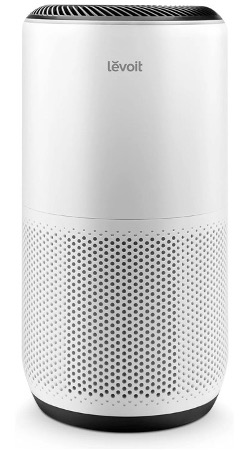
The Levoit Core 400S is our top pick for summer use. Its laser particle sensor responds quickly to pollen and dust spikes from open windows. Auto mode adjusts the fan in real time, keeping particle levels low without running at full speed — and without adding unnecessary noise or heat to an already warm room. At 24 dB on sleep mode it is near-silent overnight, and the display dims completely for a dark bedroom. The VeSync app lets you schedule higher-speed operation during peak pollen hours (typically 5–9am and 5–7pm for grass pollen) and drop to quiet mode otherwise.
Best for: Bedrooms and living rooms up to 37 m², allergy sufferers in summer, smart scheduling of pollen management.
2. Levoit Core 300S — Best for Small Hot Bedrooms
CADR: ~141 m³/h | Room: up to 20 m² | Noise: 24 dB (sleep) | Energy: ~22W
For a small bedroom in summer heat, the Core 300S is ideal. At only ~22W it generates minimal heat of its own, runs at 24 dB on sleep mode, and its compact cylindrical footprint sits comfortably on a bedside table or windowsill. Running it on auto with the window slightly open gives you ventilation plus pollen filtration simultaneously — one of the most practical overnight setups for hay fever sufferers. The display dims completely in sleep mode.
Best for: Small bedrooms up to 20 m², light sleepers, overnight pollen filtration while keeping windows open for airflow.
3. Coway AP-1512HH — Best for Quiet Eco Operation in Summer
CADR: ~418 m³/h | Room: up to 33 m² | Noise: 21 dB (eco) | Energy: <1W (eco)
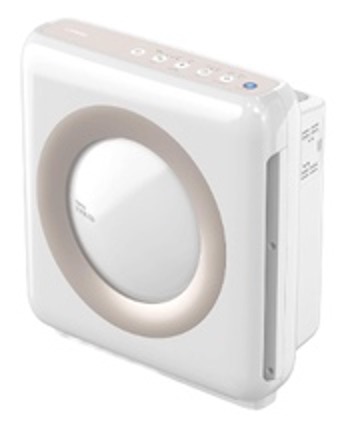
The Coway’s eco mode is uniquely useful in summer: the fan switches off entirely when no pollution is detected for 30 minutes, then restarts automatically when particles are sensed. On a still night with windows closed, it runs only when needed — keeping the room as quiet and cool as possible. When a breeze brings pollen through an open window, it responds immediately. At 21 dB in eco mode it is the quietest option on this list, and the colour-coded air quality ring shows in real time when outdoor air quality deteriorates.
Best for: Medium rooms up to 33 m², those who want the quietest possible overnight operation, households where the purifier runs intermittently.
4. Winix 5500-2 — Best for Summer Pet Households
CADR: ~394 m³/h | Room: up to 33 m² | Noise: ~27–40 dB (low) | Energy: ~70W max
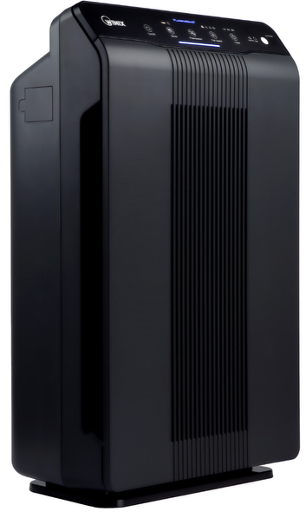
In summer pets shed more heavily — dander levels rise alongside pollen, creating a combined allergen burden in living rooms. The Winix 5500-2’s washable pre-filter is practical for high-dander households (rinse every 2–3 weeks in summer), and its pellet-based carbon handles pet odours that worsen in warm weather. The light-sensor auto-sleep mode drops the fan to its quietest setting automatically as the room darkens in the evening.
Best for: Pet households in summer, living rooms up to 33 m², combined pollen and pet dander environments.
5. Blueair Blue Pure 211+ — Best for Large Hot Rooms
CADR: ~595 m³/h | Room: up to 50 m² | Noise: ~35–36 dB (low) | Energy: ~30W max
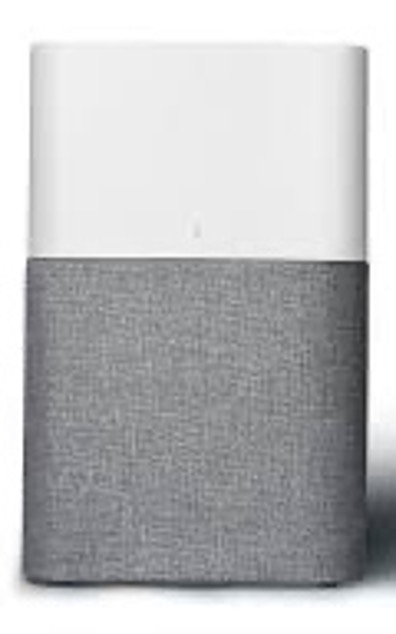
For large open-plan living spaces, the Blueair 211+ has the highest CADR on this site and clears a large room of pollen and PM2.5 faster than any alternative here. Its relatively low energy draw (~30W) makes it efficient for continuous summer use at low-to-medium speeds. The washable fabric pre-filter is easy to clean during high-pollen periods. Note: the built-in ioniser cannot be disabled — not recommended for nurseries but suitable for general adult living rooms.
Best for: Large open-plan spaces up to 50 m², fast pollen clearance in large rooms.
Quick Comparison: Best Air Purifiers for Hot Rooms UK
| Model | CADR | Room Size | Noise (low) | Energy | Summer Strength |
| Levoit Core 400S | ~442 m³/h | Up to 37 m² | 24 dB | ~38W | Smart scheduling, laser sensor |
| Levoit Core 300S | ~141 m³/h | Up to 20 m² | 24 dB | ~22W | Cool-running, small bedrooms |
| Coway AP-1512HH | ~418 m³/h | Up to 33 m² | 21 dB (eco) | <1W (eco) | Quietest eco, auto-off |
| Winix 5500-2 | ~394 m³/h | Up to 33 m² | ~27–40 dB | ~70W | Pets + pollen, auto sleep |
| Blueair Blue Pure 211+ | ~595 m³/h | Up to 50 m² | ~35–36 dB | ~30W | Fastest clearance, large rooms |
Open Windows or Keep Closed? The UK Summer Dilemma
There is no single right answer — it depends on the day:
- High pollen days (grass season, June–August): keep windows closed during peak hours (early morning and early evening). Run the purifier on auto or medium. Open briefly mid-day if needed for ventilation, then close again.
- Low pollen, clean air days: open windows freely. Run the purifier on low or eco to handle background particulates.
- Hot nights in high-pollen areas: a fan combined with a HEPA purifier on auto gives airflow and filtration simultaneously. If you must open the window, position the purifier between the window and your bed to filter incoming air before it reaches you.
- Check the DEFRA Daily Air Quality Index before opening windows. On days where outdoor air quality is Moderate (4–6) or High (7+), keeping windows closed and running the purifier is the better choice for respiratory health — even in hot weather.
Frequently Asked Questions
Will an air purifier cool down a hot room?
No. An air purifier filters and recirculates existing room air — it does not lower temperature. For cooling you need a fan or air conditioning unit. An air purifier manages air quality in a hot room; it does not address the heat itself.
Do air purifiers work in hot weather?
Yes — HEPA and activated carbon filtration performance is not affected by temperature within normal UK indoor ranges. The motors in quality air purifiers are designed for continuous operation in these conditions. Filter lifespan may reduce slightly in dustier summer conditions, so check and clean the pre-filter more frequently in summer.
Is it worth running an air purifier in summer in the UK?
Yes — arguably more so than winter. UK summers bring peak grass pollen, higher humidity (dust mites and mould), ground-level ozone on hot days, and open windows letting in outdoor pollutants. For allergy and asthma sufferers especially, continuous summer use provides a measurable reduction in symptom triggers.
Can I run my air purifier with a fan on?
Yes, and it can be beneficial. A fan circulates room air, which helps the purifier’s intake draw in particles from a wider area. Running both simultaneously — fan for airflow, purifier for filtration — is a practical summer setup. Position the fan to circulate air through the purifier’s intake zone for best effect.
Which air purifier is best for hay fever in summer?
Any H13 HEPA purifier captures pollen effectively — the key is matching the CADR to your room size and running it continuously during pollen season. See our dedicated guide: Best Air Purifier for Hay Fever UK.
Related Guides
Suffering from hay fever in the summer heat? Read: Best Air Purifier for Hay Fever UK.
Summer humidity as well as air quality concerns? Read: How to Reduce Humidity in a Flat UK.
Not sure whether you need an air purifier or dehumidifier? Read: Dehumidifier vs Air Purifier UK.
For daily UK outdoor air quality forecasts, see the DEFRA UK Air Quality Index. Check it before opening windows on hot days.

One Comment