Dyson Purifier vs Levoit UK 2026: Is Dyson Worth the Premium?
Last updated: 19 May 2026
This page contains affiliate links. If you buy through these links, we may earn a small commission at no extra cost to you. See our Affiliate Disclaimer for more information.
Dyson purifier vs Levoit is one of the most searched air purifier comparisons in the UK — and for good reason. Dyson is the premium brand everyone recognises, with striking bladeless designs and a loyal following. Levoit is the challenger that has quietly become one of Amazon UK’s bestselling air purifier brands by delivering strong performance at a fraction of the cost.
The honest answer to which is better depends entirely on what you are paying for. This guide breaks down filtration performance, CADR, noise, smart features, running costs, and design — so you can decide whether the Dyson premium is justified for your home or whether a Levoit gives you everything you actually need.
We focus on the models relevant to this site: the Levoit Core 300S, Core 300, and Core 400S, compared against the Dyson Purifier Cool TP07 — the most popular Dyson air purifier in the UK market.
The Brands at a Glance
Dyson
Dyson is a British engineering company founded in 1991 by Sir James Dyson, best known for its bagless vacuum cleaners. It entered the air purifier market with its Pure Cool range and has since built a premium ecosystem of purifiers that double as fans, heaters, or humidifiers. Dyson’s USPs are its iconic bladeless design, fully sealed HEPA H13 filtration system, real-time LCD air quality display, and multi-function capability. UK RRP for the Purifier Cool TP07 sits at around £449–£499.
Levoit
Levoit is a California-based brand launched in 2017 under parent company Arovast. It has risen rapidly to become one of the best-selling air purifier brands on Amazon UK by offering genuine H13 HEPA filtration, smart app features, and competitive CADR figures at prices between £70 and £190. Levoit focuses exclusively on air purification — no fan, heater, or humidifier functionality — which keeps costs down and performance per pound high.
The Key Question: Does Dyson Clean Air Better Than Levoit?
No — and this surprises many buyers. Both the Dyson TP07 and the Levoit Core series use True HEPA H13 filtration, capturing 99.97% of particles down to 0.3 microns, and 99.95% down to 0.1 microns. On paper, the filtration standard is identical.
Where it gets interesting is CADR — the Clean Air Delivery Rate, which measures how quickly a purifier actually cleans a given volume of air. Dyson does not publish CADR figures on its product pages, which is itself a red flag for comparison shoppers. Independent testing by HouseFresh found the TP07 took 62 minutes to clear a 728 cubic foot test room — compared to 54 minutes for the Levoit Core 300, a machine that costs around £80.
UK air purifier testing site best-air-purifiers.co.uk put it bluntly: the Levoit Core 400S delivers a CADR of approximately 400 m³/h, compared to the Dyson TP07’s estimated ~290 m³/h. Per pound spent, Levoit delivers over three times the clean air output. That is not a marginal difference.
Filtration: What’s Actually Different
Both brands use HEPA H13 filtration paired with activated carbon for odour and VOC removal. The key difference is Dyson’s fully sealed system.
Dyson’s Fully Sealed System: Most air purifiers have a quality HEPA filter but gaps in the casing around the filter where unfiltered air can bypass. Dyson seals the entire machine to HEPA H13 standard — not just the filter but the whole unit. This means genuinely zero bypass. For allergy and asthma sufferers, this is a real engineering advantage, even if the CADR figures are lower than competitors.
Levoit’s H13 HEPA: Levoit uses a 3-stage system — washable pre-filter, H13 HEPA, and activated carbon — with a 360° air intake on the Core cylindrical models. Independent testing consistently shows near-zero PM2.5 and PM10 after one hour of operation. The Core 400S’s laser dust sensor is more accurate than many competitors’ optical sensors, enabling genuinely responsive auto mode.
For most UK households, both filtration systems deliver clean air effectively. The Dyson’s sealed system edge matters most for people with severe respiratory conditions; for everyday allergen and dust removal, the Levoit’s higher CADR means the air is cleaned faster.
CADR and Room Coverage
| Model | CADR (approx.) | Room Coverage | UK RRP (approx.) |
| Levoit Core 300 / 300S | ~141 m³/h | Up to ~20 m² | £70–£110 |
| Levoit Core 400S | ~442 m³/h | Up to ~37 m² | £130–£190 |
| Dyson Purifier Cool TP07 | ~290 m³/h (est.) | Up to ~30–35 m² (practical) | £449–£499 |
Dyson rates the TP07 for rooms up to 800 sq ft, but that figure assumes a single air change per hour — not the four to five air changes per hour that allergy and asthma organisations recommend for effective symptom relief. At the recommended ACH, the TP07 is best suited to rooms up to around 30–35 m². The Levoit Core 400S covers a similar area faster, and at a third of the price.
The Fan Function: Dyson’s Strongest Argument
This is where Dyson genuinely earns its premium — for the right buyer.
The Dyson Purifier Cool TP07 is a 2-in-1: a bladeless tower fan and an air purifier in one machine. If you were going to buy both a fan and an air purifier, combining them into one device makes sense. The bladeless Air Multiplier design produces smooth, oscillating airflow across 350° — noticeably more pleasant than the choppy output of traditional bladed fans. It works in cooling mode and in a backward airflow mode that purifies without directing air at you.
Levoit makes no such claim — its Core series is a dedicated air purifier and nothing else. If you already own a fan or rarely use one in the UK climate, this advantage largely disappears. But for a bedroom or living room where you want cool, purified air in summer, the Dyson’s dual function has genuine practical value.
Noise Levels
Both brands offer night modes with dimmed displays and reduced fan speeds. In practice:
- Levoit Core 300S / 300: ~24 dB on sleep mode — near-silent and one of the quietest machines at any price point.
- Levoit Core 400S: ~24 dB on sleep mode — remarkably quiet for a unit covering up to 37 m².
- Dyson TP07: runs at approximately 35–45 dB at lower settings. The night mode dims the display and reduces speed, but it produces a consistent whooshing airflow sound even at quiet settings. Most users find it easy to sleep with; light sleepers may notice it.
For pure bedroom quietness, Levoit wins. The Dyson is not loud, but its airflow character is more present than a Levoit on sleep mode. Some users actually prefer the white noise quality of the Dyson’s smooth airstream.
Smart Features and App Control
Both brands offer strong smart features at this level — this is not a differentiator.
| Feature | Levoit Core 400S | Dyson TP07 |
| App control | Yes — VeSync (iOS/Android) | Yes — MyDyson app |
| Voice control | Alexa, Google Assistant | Alexa, Google Home, Siri |
| Auto mode / air sensor | Yes — laser dust sensor | Yes — multiple sensors |
| Real-time display | App only (no onboard screen) | LCD screen on unit |
| Scheduling | Yes | Yes |
| Fan function | No | Yes — 350° oscillating fan |
| Night mode | Yes — dims display, low speed | Yes — dims display, quiet mode |
One advantage Dyson has here: the onboard LCD screen. The Dyson TP07 shows real-time PM2.5, PM10, VOC, and NO₂ levels directly on the unit — no phone required. Levoit’s Core series requires you to open the VeSync app to check air quality readings. For tech-comfortable users this is a minor inconvenience; for others it matters.
Running Costs: The Hidden Price of Owning a Dyson
The upfront price difference between Dyson and Levoit is stark, but the ongoing costs are where many Dyson owners get a surprise. Approximate annual running costs at UK electricity rates (34p/kWh, 8 hours/day):
| Model | Unit Price (approx.) | Filter Cost | Filter Life | Annual Filter + Energy Est. |
| Levoit Core 300 / 300S | £70–£110 | £15–25 | 6–12 months | ~£30–45/yr |
| Levoit Core 400S | £130–£190 | £25–35 | 6–12 months | ~£40–60/yr |
| Dyson TP07 | £449–£499 | £55–65 | 12 months | ~£70–90/yr |
Over five years, a Levoit Core 400S owner typically spends around £350–£490 in total (unit + filters + energy). A Dyson TP07 owner spends around £900–£1,000. That is a gap of roughly £500 for equivalent or better air cleaning performance. The Dyson’s engineering, design, and fan function have real value — but it is worth understanding the full cost of ownership before buying.
Design and Build Quality
Dyson’s design lead is real and should not be dismissed. The TP07 is a striking piece of industrial engineering — machined-quality materials, a magnetic remote that clips to the top of the unit, and a form that people genuinely want to display in their homes. If aesthetics and perceived quality matter in your space, Dyson has the edge.
Levoit’s Core series is well-made for its price — clean cylindrical design in white that blends into most rooms without drawing attention. It looks good, but it looks like an air purifier. The Dyson looks like a design statement.
Dyson TP07 vs Levoit: Head-to-Head Summary
| Category | Levoit Core 400S | Dyson Purifier Cool TP07 |
| Filtration grade | H13 HEPA, 99.97% at 0.3 microns | H13 HEPA fully sealed, 99.95% at 0.1 microns |
| CADR | ~442 m³/h — excellent | ~290 m³/h (est.) — moderate for price |
| Room coverage (practical) | Up to ~37 m² | Up to ~30–35 m² |
| Noise (sleep/night mode) | ~24 dB — near-silent | ~35–45 dB — quiet, airflow audible |
| Smart app | VeSync — strong | MyDyson — strong |
| Onboard display | No (app only) | Yes — LCD with PM2.5, VOC, NO₂ |
| Fan function | No | Yes — 350° bladeless fan |
| Annual running cost | ~£40–60/yr | ~£70–90/yr |
| Unit price | ~£130–£190 | ~£449–£499 |
| Best for | Value, allergy relief, bedrooms | Design, 2-in-1 purifier+fan, premium homes |
Verdict: Who Should Buy Which?
Buy Levoit if…
- Air cleaning performance per pound is your priority. The Core 400S delivers higher CADR at around a third of the Dyson’s price.
- You want near-silence in a bedroom. At 24 dB, Levoit’s sleep mode is class-leading.
- You don’t need a fan — you just want cleaner air.
- You want to keep total 5-year ownership costs low.
- You’re outfitting multiple rooms — you could buy three Levoit Core 300S units for the price of one Dyson TP07.
Buy Dyson if…
- You want a 2-in-1 purifier and cooling fan — a genuinely useful combination, especially in a living room or bedroom in summer.
- Design and build quality matter — you want something that looks premium in your home.
- You value the onboard LCD display for at-a-glance air quality without checking an app.
- You have severe allergies or asthma and want the reassurance of a fully sealed HEPA H13 machine.
- Budget is not a primary constraint.
Find the Right Model for Your Home
Levoit Core 300S — Best Budget Option for Small Rooms
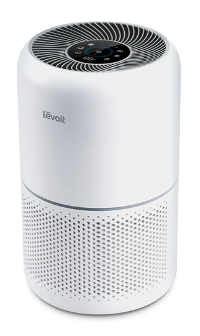
H13 HEPA, 24 dB sleep mode, smart app. Covers rooms up to ~20 m².
Levoit Core 300 — Best No-Frills Levoit
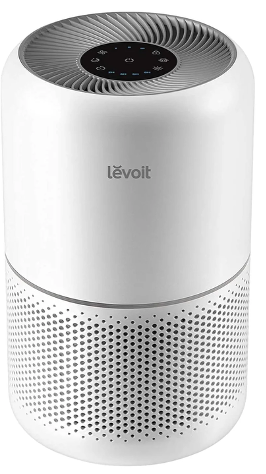
No app, no Wi-Fi, but the same near-silent filtration performance at the lowest price.
Levoit Core 400S — Best Levoit for Larger Rooms
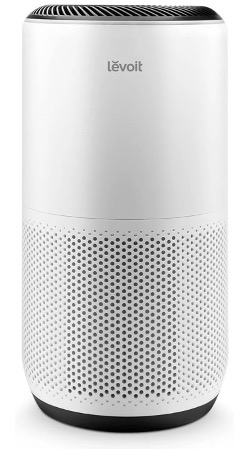
Smart app, laser sensor, 442 m³/h CADR. Covers rooms up to ~37 m².
Frequently Asked Questions
Is Dyson actually better than Levoit at cleaning air?
Not in terms of CADR. Independent tests show Levoit’s Core 400S cleans a room faster than the Dyson TP07, which costs around three times as much. Where Dyson has the edge is its fully sealed casing (which prevents any air bypassing the filter) and its dual fan-and-purifier functionality.
Why doesn’t Dyson publish CADR figures?
Dyson does not officially publish CADR ratings for its air purifiers. Independent CADR figures from Energy Star testing and third-party reviewers show the TP07’s performance is modest relative to its price. CADR is the most useful metric for comparing air cleaning speed, so its absence from Dyson’s marketing is worth noting.
Is a Dyson air purifier worth it in the UK?
It depends on your priorities. If you want a dual-function purifier and cooling fan with premium build quality and a striking design, the Dyson TP07 delivers real value. If your priority is the fastest, most efficient air cleaning per pound spent, a Levoit Core 400S will outperform it for a fraction of the cost.
How much does a Dyson filter cost in the UK?
Genuine Dyson replacement filters for the TP07 cost approximately £55–£65 and should be replaced every 12 months. Third-party compatible filters are available for less. By comparison, Levoit Core 400S filters cost around £25–£35 and last a similar period.
Which is quieter — Dyson or Levoit?
Levoit is quieter on the lowest setting. The Core 300S and 400S reach 24 dB in sleep mode — essentially inaudible. The Dyson TP07’s night mode runs at approximately 35–45 dB, with an audible smooth airstream. It is not loud, but Levoit’s sleep mode figures are class-leading.
Related Guides
Comparing Levoit against Blueair instead? Read: Levoit vs Blueair Air Purifier UK.
Not sure whether to buy an air purifier or a dehumidifier? Read: Dehumidifier vs Air Purifier UK.
Dealing with mould as well as poor air quality? Start here: Best Dehumidifier for Mould UK.
For guidance on indoor air quality and respiratory health, see Asthma + Lung UK.

2 Comments