Does an Air Purifier Help with Hay Fever UK?
This page contains affiliate links. If you buy through these links, we may earn a small commission at no extra cost to you. See our Affiliate Disclaimer for more information.
Hay fever affects an estimated 15–20% of the UK population, making it one of the most common allergic conditions in the country. Symptoms range from a mild inconvenience to a genuinely debilitating combination of sneezing, itchy eyes, nasal congestion, and fatigue — often persisting for weeks at a time during the spring and summer pollen seasons.
One of the most common questions hay fever sufferers ask is whether an air purifier can help. The short answer is yes — but only if you choose the right type, use it in the right room, and manage your expectations about what it can and cannot do. This guide explains everything you need to know.
The Short Answer: Yes, But With Caveats
An air purifier with a true HEPA filter can significantly reduce the concentration of pollen in the air inside your home. Pollen particles typically measure between 10 and 100 microns in diameter — far larger than the 0.3 micron threshold that HEPA filters are certified to capture at 99.97% efficiency. In other words, HEPA filters remove pollen very easily.
The caveats are important, though:
- An air purifier only cleans the air in the room it is running in. It has no effect on outdoor pollen or on pollen that has settled on surfaces, bedding, or clothing.
- It does not cure hay fever. It reduces your exposure to airborne pollen indoors, which can reduce the severity and frequency of symptoms — but it works alongside medication and other measures, not instead of them.
- Not all air purifiers are equal. Models with HEPA-type or HEPA-like filters may not meet the certified standard. You need a true HEPA filter — certified to EN 1822 in the UK and EU.
How Pollen Gets into Your Home
Pollen enters homes in several ways, and understanding this helps set realistic expectations for what an air purifier can achieve.
- Open windows and doors are the most obvious route, particularly during the morning and evening when pollen counts are typically at their highest
- Clothing and hair carry pollen indoors from outside — walking through a garden or park deposits significant amounts on fabric
- Pets bring pollen in on their fur after time outdoors
- Ventilation and extractor fans can pull outdoor air — and pollen — into the home
Once inside, pollen particles circulate in the air until they either settle on surfaces or are captured by a filter. An air purifier with a high clean air delivery rate (CADR) can significantly reduce the airborne concentration, particularly in a bedroom or living room where you spend the most time.
UK Pollen Seasons: When Is the Risk Highest?
| Pollen type | Peak season | Main sources |
| Tree pollen | Late March to mid-May | Birch, oak, ash, plane |
| Grass pollen | Mid-May to July | Ryegrass, Timothy, meadow grass |
| Weed pollen | June to September | Nettle, dock, mugwort |
| Mould spores | July to September | Alternaria, Cladosporium |
Grass pollen is the most common trigger in the UK, affecting the majority of hay fever sufferers. If you react to tree pollen, your worst months are spring. If grass pollen is your main trigger, May to July is when you need protection most. Running an air purifier through these periods — particularly in the bedroom, where you spend seven or more hours a night — makes a measurable difference to your total allergen exposure.
What the Research Says
The evidence for HEPA air purifiers and allergy reduction is broadly positive. Published research has found that HEPA air purifiers are associated with meaningful reductions in hay fever-related symptoms including nasal congestion, eye symptoms, and activity limitation, primarily by reducing particulate matter and allergen concentrations in the indoor environment.
A separate study found that HEPA air purifiers can significantly reduce medication requirements for allergy-related rhinitis by lowering fine particle concentrations. In practical terms, this means some hay fever sufferers find they can manage on lower antihistamine doses when using an effective air purifier consistently.
It is worth noting that most studies use air purifiers in bedrooms or controlled spaces — not whole-house installations. The benefit is most pronounced when the purifier is used in the room where you spend the most time, particularly overnight.
What to Look for in an Air Purifier for Hay Fever
True HEPA filter (not HEPA-type)
This is non-negotiable. A true HEPA filter certified to EN 1822 removes at least 99.95% of particles down to 0.3 microns. HEPA-type, HEPA-like, or washable HEPA filters are marketing terms that do not meet this standard. All the models recommended below use true HEPA filtration.
CADR appropriate for your room size
CADR (Clean Air Delivery Rate) measures how quickly an air purifier can clean a given volume of air, expressed in cubic metres per hour (m³/h). For a hay fever sufferer, you ideally want the purifier to cycle the air in the room 4–5 times per hour. For a typical UK bedroom of 15–20 sq m with a 2.4m ceiling (36–48 m³), you need a minimum CADR of around 150–240 m³/h.
Quiet operation for overnight use
Hay fever symptoms are worst at night for many sufferers — nasal congestion, itchy eyes, and sneezing all disrupt sleep. You will want to run the purifier while you sleep, which means noise levels on the lowest setting matter. Look for models rated below 40dB on sleep mode.
Auto mode and air quality sensor
An auto mode that responds to changes in air quality — ramping up when pollen levels are high and quieting down when the air is clean — is a genuinely useful feature. It means the purifier can react automatically when you open a window briefly or bring pollen in on your clothing.
Activated carbon filter
Not essential for pollen, but useful if your hay fever is also triggered by VOCs, cooking smells, or outdoor pollution that enters the home. Many mid-range air purifiers combine HEPA and activated carbon filtration as standard.
Recommended Air Purifiers for Hay Fever UK
Levoit Core 300S — Best for Small Bedrooms
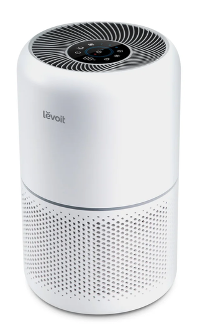
The Levoit Core 300S is an excellent entry-level HEPA air purifier for a standard UK bedroom. It uses a three-stage filtration system — pre-filter, true HEPA, and activated carbon — and operates at just 24dB on its lowest setting, making it genuinely inaudible during sleep. Its CADR of around 141 m³/h is sufficient for rooms up to approximately 18 sq m, covering most single or double bedrooms.
The Levoit Core 300S connects via Wi-Fi to the VeSync app, allowing you to set schedules, check air quality data, and control it remotely. It has auto mode with a built-in air quality sensor. Filter replacement is required roughly every 6–8 months depending on usage. A solid, well-priced choice for a hay fever sufferer’s bedroom.
Levoit Core 300 — Best Budget HEPA Purifier
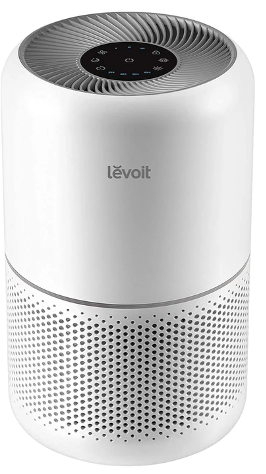
If you prefer a simpler unit without smart features, the Levoit Core 300 offers the same core HEPA filtration as the 300S at a lower price. It covers rooms up to around 18 sq m, operates quietly, and uses the same three-stage filtration system. No app or Wi-Fi connectivity, but the controls are simple and reliable. A strong choice for anyone who wants effective pollen filtration without the added complexity of a smart platform.
Levoit Core 400S — Best for Medium to Large Rooms
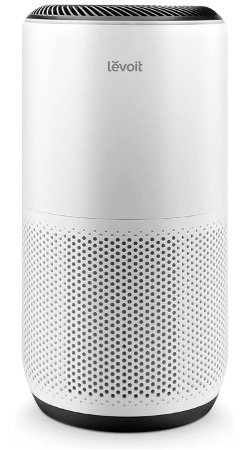
For a larger living room or open-plan space, the Levoit Core 400S offers significantly higher CADR and covers rooms up to around 36 sq m. It uses the same true HEPA and activated carbon filtration as the 300S, with smart connectivity, auto mode, and an air quality sensor. If your hay fever symptoms are worst when you are in the living room during the day, this is the model to choose.
Winix 5500-2 — Best for Larger Spaces with Auto Mode
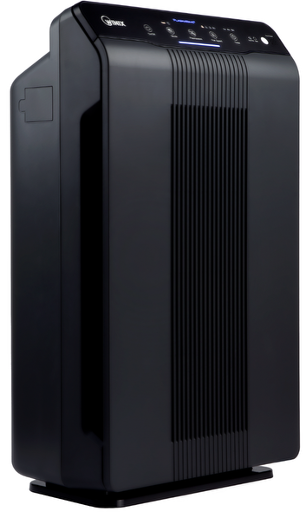
The Winix 5500-2 is a larger, more powerful unit suited to living rooms and open-plan spaces. It includes a true HEPA filter, an activated carbon filter, and Winix’s PlasmaWave technology — an ionisation feature that can be disabled if preferred. Its auto mode responds to changes in air quality in real time, and it has a sleep mode that dims the display and reduces fan noise overnight. A strong all-rounder for a larger space.
Coway AP-1512HH — Reliable Mid-Range HEPA Purifier
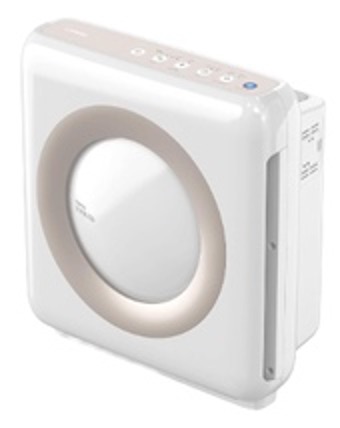
The Coway AP-1512HH has a strong long-term reliability record and is a popular choice among allergy sufferers. It features a four-stage filtration system including a true HEPA filter and activated carbon layer, an air quality indicator, and auto mode. It covers rooms up to around 36 sq m effectively and operates quietly on its lowest setting. A dependable choice that has consistently performed well in independent tests.
Air Purifier Comparison for Hay Fever UK
| Model | HEPA | Room size | Auto mode | Best for |
| Levoit Core 300S | True HEPA | Up to 18 sq m | Yes | Small bedroom |
| Levoit Core 300 | True HEPA | Up to 18 sq m | No | Budget bedroom |
| Levoit Core 400S | True HEPA | Up to 36 sq m | Yes | Larger rooms |
| Winix 5500-2 | True HEPA | Up to 40 sq m | Yes | Living rooms |
| Coway AP-1512HH | True HEPA | Up to 36 sq m | Yes | All-rounder |
How to Use an Air Purifier Effectively for Hay Fever
Place it in your bedroom. You spend more time in your bedroom than any other room. Running an air purifier in your bedroom overnight — during the hours when pollen concentrations would otherwise build up — gives you the greatest reduction in total allergen exposure.
Run it continuously during pollen season. Unlike a dehumidifier, an air purifier needs to run consistently to maintain low indoor pollen levels. If you switch it off, pollen re-enters quickly through normal air movement. Use auto mode if available — it will reduce fan speed when the air is clean and ramp up when pollen concentration rises.
Keep windows closed during peak hours. Pollen counts are highest in the morning (6–10am) and early evening (5–7pm). Keep windows closed during these periods. If you want fresh air, open windows briefly at night when pollen levels are lower. Running an air purifier in a room with an open window is significantly less effective.
Change clothes when you come indoors. Pollen sticks to clothing and hair. Changing out of outdoor clothes and leaving shoes at the door reduces the amount of pollen you carry into the living space — and reduces the load on the air purifier.
Shower before bed. Rinsing pollen from hair and skin before sleep significantly reduces overnight exposure in the bedroom — even with an air purifier running.
Replace the filter on schedule. A HEPA filter that is past its service life becomes progressively less effective. Most purifiers in this guide need a filter change every 6–12 months. Check the indicator light or set a calendar reminder.
Start early in the season. If you know your hay fever typically starts in March or May, begin running the purifier two weeks before symptoms usually arrive. Getting ahead of pollen exposure is more effective than reacting once symptoms have already taken hold.
Will an Air Purifier Replace My Hay Fever Medication?
For most people, no — but it can complement medication meaningfully. Research suggests that consistent use of a HEPA air purifier can reduce the required dose of antihistamines and nasal steroids for some sufferers by lowering the total amount of allergen in the indoor environment. Think of it as reducing your exposure so that your medication — and your immune system — has less to deal with.
Allergy UK advises hay fever sufferers to combine multiple strategies: medication where needed, reducing outdoor exposure on high pollen days, and improving indoor air quality. An air purifier is one part of that combination — not a standalone solution.
For clinical advice on hay fever treatment, the NHS provides comprehensive guidance on hay fever symptoms and treatments.
Frequently Asked Questions
Does an air purifier help with hay fever?
Yes, if it has a true HEPA filter. HEPA filters are certified to remove at least 99.95% of particles down to 0.3 microns — pollen particles are much larger (10–100 microns), so they are captured easily. The purifier reduces the concentration of airborne pollen indoors, which reduces symptom severity for most users.
Which air purifier is best for hay fever UK?
For a bedroom, the Levoit Core 300S is our top pick — it is quiet enough for overnight use, has auto mode, and uses true HEPA filtration. For a larger room or living space, the Levoit Core 400S or Winix 5500-2 offer more coverage. See our full guide to the best air purifiers for hay fever UK for detailed reviews.
Can I use an air purifier with windows open?
You can, but it is significantly less effective. An air purifier works by repeatedly cycling the air in a sealed room through its filter. With a window open, fresh — and pollen-laden — air continuously enters the room, overwhelming the purifier’s ability to maintain low pollen concentrations. For maximum effect, run the purifier with windows closed, particularly during high-pollen periods.
Where should I put my air purifier for hay fever?
Your bedroom is the highest-priority location — you spend the most time there and pollen exposure overnight has the greatest impact on symptoms. Place it on a bedside table or the floor near the bed, ensuring at least 30cm of clearance on all sides for airflow. If you work from home and symptoms affect your productivity, a second unit in your home office is worthwhile.
Do air purifiers help with pollen from outside?
Yes — by capturing pollen that has made its way indoors. Air purifiers cannot affect outdoor pollen levels, but they can significantly reduce the concentration of pollen in the rooms where you spend your time. Combined with keeping windows closed during peak pollen hours, a HEPA air purifier can make your home a meaningful refuge during hay fever season.
Do air purifiers help with dust mites and mould spores as well as pollen?
Yes. True HEPA filters capture pollen, dust mite particles, and mould spores — all of which are common triggers for allergic rhinitis. If your symptoms persist year-round (known as perennial rhinitis) rather than being seasonal, an air purifier can help with these additional triggers too. See also our guide to the best air purifier for mould spores UK.
How long should I run an air purifier for hay fever?
During peak pollen season, running the purifier continuously — or at least for the hours you are in the room — gives the best results. Most models with auto mode will adjust fan speed automatically, keeping energy use reasonable. The Levoit Core 300S and Levoit Core 400S both have energy-efficient auto modes that make all-day running practical and affordable.
Our Verdict
Yes, an air purifier genuinely helps with hay fever — but the key word is genuine HEPA filtration. A true HEPA filter captures pollen with ease and, used consistently in the right room, can meaningfully reduce symptom severity and your reliance on medication. The Levoit Core 300S is our top recommendation for most UK bedrooms — quiet enough to run overnight, smart enough to manage itself, and reliably effective. For a larger space, step up to the Levoit Core 400S or Winix 5500-2.
Pair the purifier with sensible pollen-avoidance habits — closing windows during peak hours, showering before bed, and changing clothes when you come indoors — and you have a meaningful, practical defence against hay fever indoors.

One Comment