
Best Dehumidifier for Conservatory UK 2026
This page contains affiliate links. If you buy through these links, we may earn a small commission at no extra cost to you. See our Affiliate Disclaimer for more information.
A conservatory is one of the most moisture-prone spaces in any UK home. Glass walls and roof panels create a huge surface area for condensation to form, and in an unheated or poorly ventilated space, that moisture quickly turns into dripping windows, peeling frames, and black mould. The answer is a dehumidifier — but choosing the right one for a conservatory is not the same as choosing one for a bedroom or living room.
This guide covers the best dehumidifiers for conservatories in the UK in 2026, with a clear recommendation for heated and unheated spaces, small and large rooms, and year-round versus seasonal use.
Quick Picks: Best Dehumidifier for Conservatory UK
| Model | Best For | Type |
| Meaco DD8L Junior | Cold/unheated conservatories — our top pick | Desiccant |
| Meaco MeacoDry Abc 12L | Heated conservatories, summer use | Compressor |
| Meaco 20L Low Energy | Large conservatories with severe damp | Compressor |
| Pro Breeze 12L | Budget pick for heated conservatories | Compressor |
Why Are Conservatories So Prone to Damp?
Conservatories suffer from condensation for several reasons. The large expanse of glass loses heat quickly in the evening, causing the interior surface temperature to drop below the dew point of the air inside. When warm, moist air meets cold glass, water condenses on the surface — often pooling on sills, dripping from the roof, and soaking into wooden frames and floors.
In an unheated conservatory during a UK winter, temperatures can fall well below 10°C overnight. This makes conservatories one of the most challenging environments for a dehumidifier, because most standard compressor models lose significant efficiency below 15°C and can stop working effectively in the cold.
Common signs you need a dehumidifier in your conservatory:
- Condensation on windows every morning
- Water pooling on sills or dripping from the roof
- Musty or damp smell when you enter the room
- Black mould appearing on window frames, walls, or grout
- Peeling paint or warped wooden furniture
Desiccant or Compressor Dehumidifier for a Conservatory?
This is the most important question to answer before buying. For most UK conservatories, a desiccant dehumidifier is the better choice — and here is why.
Compressor (refrigerant) dehumidifiers work by cooling a coil to condense moisture from the air. They are highly energy-efficient in warm conditions, but their performance drops sharply in cold temperatures. Below 15°C, extraction rates fall significantly; below 10°C, many models barely function at all and may trigger continuous defrost cycles.
Desiccant dehumidifiers use a moisture-absorbing rotor to capture water from the air without relying on temperature. They work effectively from 1°C upwards, making them far better suited to the cold, unheated conditions typical of a UK conservatory in autumn and winter. A useful bonus: desiccant units emit air that is 10–12°C warmer than the room, which can take the chill off a cold conservatory.
The exception: if your conservatory is well-heated and you mainly need humidity control in spring and summer, a quality compressor model like the Meaco MeacoDry Abc 12L is cheaper to run and perfectly capable.
Best Dehumidifiers for Conservatory UK — Reviews
1. Meaco DD8L Junior — Best Overall for Conservatories
The Meaco DD8L Junior is our top recommendation for conservatories in the UK, and it is easy to see why. As a desiccant dehumidifier, it operates effectively from 1°C to 37°C — which means it will keep working through even the coldest winter nights when your conservatory is unheated. It extracts up to 8 litres of moisture per day, which in real UK conditions (lower temperatures and humidity) rivals many compressor models rated at 16–20 litres.
The Meaco DD8L Junior runs quietly, making it ideal for a conservatory used as a sitting room or home office. Meaco’s Control Logic system samples the air every 30 minutes and only runs the unit when needed, keeping running costs down. It also has a laundry mode, a 2-litre water tank with a continuous drain option, and a child lock. At around 6kg, it is lightweight enough to move between rooms easily.
Pros:
- Works from 1°C — perfect for unheated conservatories
- Emits warm air as a by-product, helping to heat the space
- Quiet operation with Meaco Control Logic for energy savings
- Compact and lightweight at just 6kg
- Continuous drain option available
Cons:
- Higher wattage than compressor models in warm conditions
- No ioniser (the standard DD8L has one, but costs more)
Verdict: The Meaco DD8L Junior is the single best dehumidifier for the majority of UK conservatories. If your conservatory is unheated, cold, or you want year-round protection, this is the one to buy.
2. Meaco MeacoDry Abc 12L — Best for Heated Conservatories
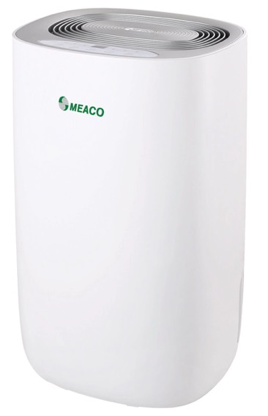
If your conservatory has heating and you mainly need humidity control at room temperature, the Meaco MeacoDry Abc 12L is an excellent choice. As a compressor dehumidifier, it is cheaper to run than desiccant models in warm conditions, costing around 4p per hour. It operates at temperatures from 5°C to 35°C, which covers a heated conservatory comfortably.
The Meaco MeacoDry Abc 12L is one of the quietest compressor dehumidifiers on the market, operating at just 36–40dB — it has earned the Quiet Mark seal of approval. It features an adjustable humidistat (30–80% RH), a digital LCD display, laundry mode, auto-defrost, and a 2.6-litre tank with a continuous drain option. Its slim, modern design fits unobtrusively into a conservatory used as a living space.
Pros:
- Very cheap to run at 4p per hour
- Quiet Mark certified — one of the quietest compressor models available
- Compact and modern design
- Adjustable humidistat and laundry mode
- Auto-defrost for occasional cold spells
Cons:
- Not suitable for unheated conservatories in winter
- Performance drops below 10°C
Verdict: The Meaco MeacoDry Abc 12L is an ideal choice for a well-insulated, heated conservatory or for summer-only use. If you heat your conservatory and keep it above 15°C, this is the more economical option.
3. Meaco 20L Low Energy — Best for Large Conservatories
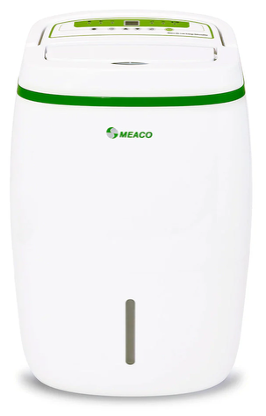
For a large conservatory — particularly one over 30 square metres — the Meaco 20L Low Energy offers the extraction capacity to keep on top of serious damp. It removes up to 20 litres of moisture per day and is designed around energy efficiency, with Meaco’s Control Logic technology ensuring it only runs when the humidity requires it.
The Meaco 20L Low Energy is a compressor unit, so it performs best in a heated conservatory. However, its high extraction rate makes it the strongest option when you need to bring a significantly damp space under control quickly. It includes a continuous drain hose connection, laundry mode, and a generous tank. Like all Meaco products, it is backed by solid warranty support and UK-based customer service.
Pros:
- High 20L extraction rate for large, damp conservatories
- Energy-saving Control Logic — only runs when needed
- Continuous drain option ideal for permanent placement
- Reliable Meaco build quality with UK support
Cons:
- Compressor type — less effective in cold, unheated spaces
- Larger and heavier than the smaller models
Verdict: The Meaco 20L Low Energy is the right choice for a large, heated conservatory with a persistent damp problem. If you need raw extraction power and plan to leave the unit running on a continuous drain, this is the model to choose.
4. Pro Breeze 12L — Best Budget Pick
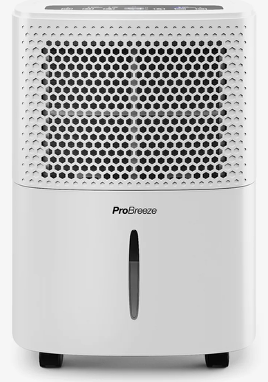
If you are looking for a capable dehumidifier at a lower price point, the Pro Breeze 12L is worth considering for a heated conservatory. It extracts up to 12 litres per day and includes a continuous drain option, laundry mode, auto-shutoff, and an adjustable humidistat. It is a no-frills unit but performs reliably for the price.
Like all compressor models, the Pro Breeze 12L is not ideal for a cold, unheated conservatory in winter. But for a south-facing conservatory that stays warm through spring and summer — or one with a consistent heat source — it provides solid humidity control at a competitive price.
Pros:
- Affordable entry point for a full-featured 12L dehumidifier
- Continuous drain, laundry mode, and auto-shutoff included
- Compact and easy to move
Cons:
- Compressor — not suited to cold conservatories in winter
- Noisier and less refined than Meaco equivalents
Verdict: The Pro Breeze 12L is a sensible budget buy for a heated conservatory. Do not use it as a year-round solution in an unheated space — for that, stick with the Meaco DD8L Junior.
Conservatory Dehumidifier Comparison Table
| Model | Type | Extraction | Min Temp | Best For |
| Meaco DD8L Junior | Desiccant | 8L/day | 1°C | Unheated conservatories |
| Meaco MeacoDry Abc 12L | Compressor | 12L/day | 5°C | Heated conservatories |
| Meaco 20L Low Energy | Compressor | 20L/day | 5°C | Large conservatories |
| Pro Breeze 12L | Compressor | 12L/day | 5°C | Budget, heated use |
What to Look for in a Conservatory Dehumidifier
Temperature range: This is the most critical factor. If your conservatory is unheated, you need a desiccant dehumidifier that works down to 1°C. Compressor models lose effectiveness below 15°C and can be near-useless in a cold conservatory in January.
Extraction capacity: For a small conservatory (up to 20 sq m), an 8–12 litre capacity is sufficient. For a large conservatory (30 sq m or more), consider a 20-litre model.
Continuous drain: If you plan to run the dehumidifier permanently, look for a model with a drain hose connection so you do not have to empty the tank manually.
Noise level: If you use your conservatory as a living space or home office, noise matters. Desiccant models like the Meaco DD8L Junior and compressor models like the Meaco MeacoDry Abc 12L are both notably quiet.
Energy efficiency: The Meaco MeacoDry Abc 12L runs at just 4p per hour. Desiccant models use slightly more power but compensate by running for shorter periods when the target humidity is reached.
What Humidity Level Should a Conservatory Be?
Aim to keep relative humidity in your conservatory between 50% and 60% RH. Below 50%, the air can feel dry and uncomfortable for plants. Above 60%, condensation becomes increasingly likely, especially overnight when temperatures drop. Most dehumidifiers with an adjustable humidistat allow you to set a target — 55% is a sensible default for a conservatory in the UK.
If you are dealing with an existing mould problem, you may want to set the target to 45–50% initially to dry the space out, then relax to 55% for ongoing maintenance. For more on this topic, see our guide to what humidity level is too high in a house UK.
Frequently Asked Questions
Can I use a compressor dehumidifier in a cold conservatory?
Not reliably. Most compressor dehumidifiers lose performance below 15°C and barely extract any moisture below 10°C. For a cold, unheated conservatory, a desiccant model like the Meaco DD8L Junior is the correct choice.
How long should I run a dehumidifier in my conservatory?
Most modern dehumidifiers with an adjustable humidistat will manage this for you automatically. Set your target humidity (55% is a good starting point) and let the machine run and cycle as needed. You do not need to leave it running continuously once the target is reached.
Where should I place the dehumidifier in a conservatory?
Place it centrally if possible, away from direct sunlight and any water sources. Do not place it directly against a wall — leave at least 30cm around the unit to allow proper airflow. Avoid placing it in a corner, as this limits the amount of air the unit can process.
Will a dehumidifier help with condensation on conservatory windows?
Yes. Condensation forms when humid air meets a cold surface. By reducing the relative humidity in the conservatory, a dehumidifier reduces the amount of moisture available to condense on the glass. See our full guide to condensation on windows every morning UK for more detail.
Is the Meaco DD8L Junior good for a conservatory?
Yes — it is our top recommendation. The Meaco DD8L Junior is a desiccant dehumidifier that works from 1°C, making it effective year-round in an unheated UK conservatory. It is quiet, energy-efficient, and compact.
What is the difference between desiccant and compressor dehumidifiers for conservatories?
A desiccant dehumidifier uses a moisture-absorbing rotor and works effectively in cold conditions (from 1°C). A compressor dehumidifier uses refrigerant cooling and is more energy-efficient in warm conditions but loses effectiveness below 15°C. For a year-round UK conservatory, desiccant is usually the right choice. For a heated conservatory used mainly in warmer months, a compressor model like the Meaco MeacoDry Abc 12Lis the more economical option. See our full guide to desiccant vs compressor dehumidifiers UK for a detailed comparison.
Our Verdict
For the vast majority of UK conservatories — especially those that are unheated or used year-round — the Meaco DD8L Junior is the best dehumidifier you can buy. Its desiccant technology works reliably from 1°C, it is quiet, compact, and backed by Meaco’s excellent warranty. If your conservatory is well-heated and you mainly need summer humidity control, the Meaco MeacoDry Abc 12L offers better running costs and is one of the quietest compressor models available. For a large conservatory with a serious damp problem, step up to the Meaco 20L Low Energy for its higher extraction capacity. Budget-conscious buyers with a heated conservatory will find the Pro Breeze 12L a reliable, no-frills option.
For further guidance on managing damp and condensation at home, the NHS has published advice on damp and mould in the home.
