Dehumidifier vs Air Purifier UK: Which One Do You Actually Need?
Last updated: 5 September 2026
This page contains affiliate links. If you buy through these links, we may earn a small commission at no extra cost to you. See our Affiliate Disclaimer for more information.
Dehumidifier vs air purifier is one of the most common comparisons UK homeowners search for, and the confusion is understandable — both devices claim to improve the air in your home, both can help with allergies, asthma and mould, but they work in completely different ways.
Air purifiers are also sometimes called air cleaners; the terms are used interchangeably in the UK, and this guide treats them as the same device. Buying the wrong one for your situation is a common and frustrating mistake, so this guide explains clearly what each device does, which problems each one solves, and when you genuinely need both.
| Key Takeaways• A dehumidifier removes moisture from the air. An air purifier (or air cleaner) removes particles from the air. They solve different problems. For mould and condensation, a dehumidifier is the priority purchase — it removes the moisture mould needs to grow. For pollen, pet dander, and asthma triggered by airborne particles, an air purifier is the priority purchase. Many UK homes with both damp and allergy problems genuinely benefit from running both devices together. Running costs are low for both: a compressor dehumidifier costs roughly 5–6p/hr, a mid-range air purifier roughly 1–2p/hr, at current Ofgem rates. |
The One-Line Answer
A dehumidifier removes moisture from the air. An air purifier removes particles from the air. They solve different problems — and in many UK homes, both are needed.
Full Comparison Table
| Dehumidifier | Air Purifier / Air Cleaner | |
| What it removes | Moisture / water vapour | Dust, pollen, pet dander, mould spores, smoke |
| Primary purpose | Reduce humidity, prevent mould and condensation | Improve air quality, reduce allergens and irritants |
| Affects humidity? | Yes — lowers relative humidity | No |
| Helps with mould | Yes — removes the moisture mould needs | Partially — removes airborne spores only |
| Helps with allergies | Indirectly — reduces dust mites and mould | Directly — filters allergens from the air |
| Helps with pet dander | No | Yes — HEPA filter captures it |
| Helps with odours | Partially — musty/damp smells only | Yes — activated carbon filter |
| Running cost | ~5–6p/hr (compressor, current rate) | ~1–2p/hr |
| Maintenance | Empty tank regularly, clean filter annually | Replace HEPA filter every 6–12 months |
How Each Device Works
How a dehumidifier works
A dehumidifier draws warm, moist air from the room over cooled coils (compressor models) or through a moisture-absorbing rotor (desiccant models). The moisture condenses and drips into a collection tank, and drier air is released back into the room.
| ⚠️ Compressor units need heat: Compressor dehumidifiers work best in heated rooms above 15°C. For unheated rooms, garages, and conservatories, a desiccant model is the right choice — see our desiccant vs compressor guide for details. |
How an air purifier (air cleaner) works
An air purifier draws room air through a HEPA filter, which captures particles as small as 0.3 microns — pollen, pet dander, dust mite debris, mould spores, and some bacteria. Many models add an activated carbon layer to absorb gases and odours. An air purifier does not change humidity — it can remove mould spores floating in the air, but it cannot stop new mould growing if the underlying damp problem isn’t addressed.
What Each Device Actually Solves
Buy a dehumidifier if you have:
- Condensation on windows in the morning
- Mould or mildew on walls, ceilings or window frames
- A persistent damp or musty smell
- High humidity readings (above 60% on a hygrometer)
- Clothes taking too long to dry indoors
- Dust mite problems — they thrive above 50% relative humidity
Buy an air purifier (air cleaner) if you have:
- Hay fever or pollen allergies
- Asthma triggered by airborne particles
- Pet allergies — dander from cats, dogs or other animals
- A smoker in the household
- Persistent odours that don’t clear with ventilation
- A baby or young child and want cleaner air in their room
Buy both if you have:
- Mould in the home AND respiratory symptoms
- Asthma or allergies AND a damp house
- Pets AND condensation issues — common in UK flats and terraces
- A child with asthma or allergies in a home with visible condensation
Which Is Better for Mould?
For mould, a dehumidifier is the more important device. Mould needs moisture to grow, and cannot establish itself in air consistently below 60% relative humidity. A dehumidifier with a humidistat set to 50–55% makes your home inhospitable to mould over time, attacking the problem at its root. An air purifier can remove airborne mould spores and ease symptoms, but it does nothing to address the moisture feeding the colony. If mould is your problem, buy a dehumidifier first.
Which Is Better for Allergies and Asthma?
- Pollen and pet dander: air purifier wins — a HEPA filter captures these directly; a dehumidifier has no effect.
- Dust mites: dehumidifier wins — mites thrive above 50% humidity and die off below 45%.
- Mould spores: dehumidifier prevents growth, air purifier removes airborne spores — both together give the best result.
- VOCs and odours: air purifier wins, specifically models with activated carbon.
Running Costs: Dehumidifier vs Air Purifier
Running costs are calculated at 26.11p/kWh, the Ofgem unit rate from 1 July 2026 (up from 24p/kWh in the first half of the year).
| Device | Typical wattage | Cost/hr (24p/kWh, H1 2026) | Cost/hr (26.11p/kWh, Q3 2026) |
| Dehumidifier (compressor, 12L) | ~220W | ~5p | ~6p |
| Air purifier (mid-range HEPA) | 30–60W | ~1p | ~1–2p |
Air purifiers cost less to run but more to maintain — a quality HEPA filter replacement runs £20–40 every 6–12 months. Dehumidifiers cost more to run but less to maintain — just an annual filter rinse and regular tank emptying.
If You Can Only Buy One
For most UK homes — particularly older, poorly-ventilated houses and flats — a dehumidifier should come first. The UK’s damp climate means moisture is the more pressing problem for most households: condensation causes structural damage, mould causes health problems, and high humidity amplifies other air quality issues. If your home is dry but you have allergies, asthma, or pets, an air purifier is the better first purchase. If you’re unsure, check your bedroom humidity with an inexpensive hygrometer. Above 60% consistently: buy a dehumidifier. Below 60% with respiratory symptoms: buy an air purifier.
Recommended Products
Best dehumidifiers UK
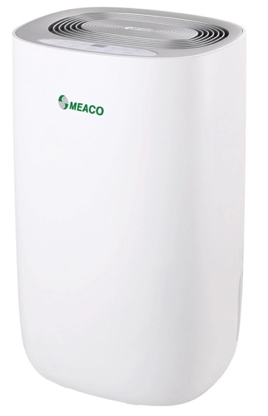
Meaco MeacoDry Abc 12L — best overall, Quiet Mark certified, ideal for bedrooms and living rooms. Check price on Amazon UK.
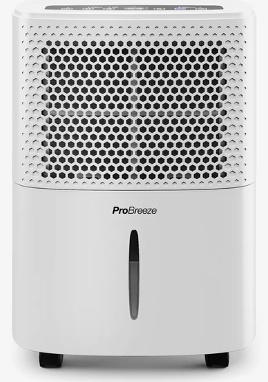
Pro Breeze 12L — Which? Best Buy, best value compressor dehumidifier. Check price on Amazon UK.
Best air purifiers UK
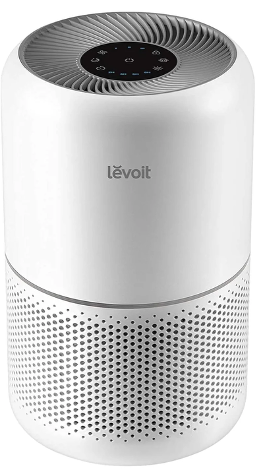
Levoit Core 400S — best mid-range air purifier for bedrooms and living rooms, covers up to 40m². Check price on Amazon UK.
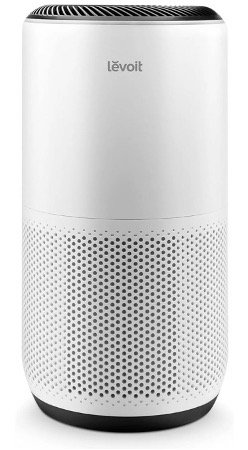
Levoit Core 300 — best compact air purifier under £100, ideal for bedrooms. Check price on Amazon UK.
Winix 5500-2 — best for pet allergies and odour removal, four-stage filtration with PlasmaWave. Check price on Amazon UK.
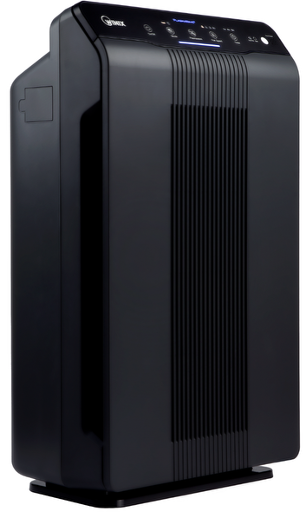
| ⚠️ PlasmaWave ioniser: The Winix 5500-2 includes a PlasmaWave ioniser feature. It can be switched off, and we recommend doing so for bedroom use. The unit was discontinued in the US, but remains available in the UK with filter support confirmed to at least 2032. |
Frequently Asked Questions
Is an air cleaner the same as an air purifier?
Yes — “air cleaner” and “air purifier” are used interchangeably in the UK to describe the same type of device: one that filters airborne particles using a HEPA filter, often combined with an activated carbon layer for odours.
Can I run a dehumidifier and air purifier at the same time?
Yes, and in many damp UK homes with allergy sufferers, running both together gives the best result — the dehumidifier controls moisture while the purifier filters particles. See our dedicated guide: Can You Run a Dehumidifier and Air Purifier at the Same Time?.
Which is better for mould, a dehumidifier or an air purifier?
A dehumidifier is the priority for mould — it removes the moisture mould needs to grow, addressing the cause rather than just the symptom. An air purifier can remove airborne spores as a helpful second step, but won’t stop new mould forming on its own.
Do I need both a dehumidifier and an air purifier in a damp UK home?
If you have visible damp or condensation and also experience allergy or asthma symptoms, yes — both devices address different parts of the problem, and using them together is common in UK homes with both issues.
Which is cheaper to run, a dehumidifier or an air purifier?
An air purifier is cheaper to run, at roughly 1–2p/hr versus roughly 5–6p/hr for a compressor dehumidifier at current Ofgem rates. However, air purifiers have higher ongoing filter costs, while dehumidifiers need only occasional filter rinsing.
| Sources • Asthma + Lung UK — Indoor Air Quality guidance • Ofgem — Energy Price Cap unit rates • Manufacturer product specifications (Meaco, Pro Breeze, Levoit, Winix) |

15 Comments