Best Dehumidifier for a Bathroom UK 2026: Stop Mould and Condensation
| Disclosure: This page contains affiliate links. If you buy through these links, we may earn a small commission at no extra cost to you. See our Affiliate Disclaimer for more information. |
The best dehumidifier for a bathroom UK homeowners can actually rely on needs to handle two specific challenges: small spaces and cold temperatures. UK bathrooms are typically 4–8m², poorly ventilated, and often unheated — conditions that cause humidity to spike to 90–100% RH during a shower and take hours to recover. Standard compressor dehumidifiers struggle in these conditions. The right choice for most UK bathrooms is a compact desiccant unit that works from 1°C and doesn’t require a large floor footprint.
This guide covers the best options for every bathroom type, explains the safety rules that apply to electrical appliances in bathrooms, and addresses the dehumidifier vs extractor fan question honestly.
| ✅ Key TakeawaysUK bathrooms typically generate 1–2 litres of water vapour per shower — in a poorly ventilated bathroom, humidity can spike to 90–100% RH within minutes and take hours to fall back below 60%. Most UK bathrooms are small (4–8m²) and cool — a compact desiccant dehumidifier working from 1°C is the correct choice for unheated bathrooms. Compressor units struggle below 15°C.The Pro Breeze 500ml Mini is our top pick for small bathrooms: near-silent at under 40dB, no tank to empty (direct drain), and designed for compact spaces. If your bathroom has a persistent mould problem, a dehumidifier addresses the cause — high humidity — while an extractor fan addresses the trigger. Both are recommended together.Never place a standard dehumidifier inside the shower zone (Zone 0/1 as defined by UK wiring regulations). Keep units at least 60cm from any water source. |
| ⚠️ Safety First — Bathroom Electrical Zones: UK wiring regulations (BS 7671) divide bathrooms into zones based on proximity to water. Zone 0 is inside the bath or shower. Zone 1 is directly above the bath/shower up to 2.25m. Zone 2 extends 60cm beyond the bath/shower rim. Standard dehumidifiers are not rated for Zone 0, 1, or 2. Always position your dehumidifier outside Zone 2 — at least 60cm from the shower, bath, or any tap. Never use an extension lead in a bathroom. |
Quick Comparison: Best Bathroom Dehumidifiers UK
| Model | Type | Min Temp | Extraction | Noise | Best For |
| Pro Breeze 500ml Mini | Desiccant | 1°C | 250ml/day | <40 dB | Small bathrooms |
| EcoAir DD1 Simple | Desiccant | 1°C | 7.5 L/day | 34 dB | Larger bathrooms |
| Meaco DD8L Junior | Desiccant | 1°C | 8 L/day | 39 dB | Premium pick |
| Meaco MeacoDry Abc 12L | Compressor | 15°C+ | 12 L/day | 35 dB | Heated bathrooms only |
Why Bathrooms Need a Different Approach
A bathroom is the most extreme humidity environment in any UK home. A 5-minute shower in a standard 6m² bathroom can introduce 200–400ml of water vapour into the air — enough to push relative humidity from 50% to above 90% in minutes. Without adequate ventilation, that moisture lingers, condensing on cold surfaces including mirrors, tiles, walls, and ceilings.
Three factors make bathrooms particularly difficult:
- Cold temperatures: Many UK bathrooms have no radiator, or one that’s only on when the central heating runs. In winter, bathroom temperatures regularly drop to 8–12°C — well below the 15°C threshold where compressor dehumidifiers become unreliable.
- Small floor area: A full-size dehumidifier is impractical in most UK bathrooms. You need something compact enough to sit on a shelf, windowsill, or floor corner without dominating the space.
- Intermittent, intense use: Unlike a bedroom or living room where humidity builds gradually, a bathroom goes from normal to saturated in minutes. A unit that responds quickly and drains automatically is more practical than one requiring manual tank emptying after every shower.
The answer to all three is a compact desiccant dehumidifier — specifically one small enough to fit the space, cold enough to work year-round, and ideally with a continuous drain option so it never needs emptying.
Dehumidifier vs Extractor Fan: Do You Need Both?
This is the most common question about bathroom humidity — and the honest answer is that they do different things and work best together.
An extractor fan removes humid air from the room by exchanging it with outside air. It’s most effective during and immediately after showering — the peak moisture event. A good extractor fan with a humidistat (one that activates automatically when humidity rises above a set level) is the single most cost-effective bathroom humidity solution and should be the first thing you install if you don’t have one.
A dehumidifier extracts moisture from the air that’s already in the room. It’s more effective at maintaining low background humidity over a longer period — overnight, for instance, or during winter when opening a window isn’t practical. It also addresses moisture that has already entered walls and surfaces rather than just expelling air.
If your bathroom has a functioning extractor fan but still suffers from persistent condensation or mould, adding a dehumidifier tackles the residual moisture the fan isn’t clearing. If you have neither, start with an extractor fan — it’s less expensive, uses less electricity, and solves the acute problem. Add a dehumidifier if the problem persists.
Pro Breeze 500ml Mini — Best for Small UK Bathrooms
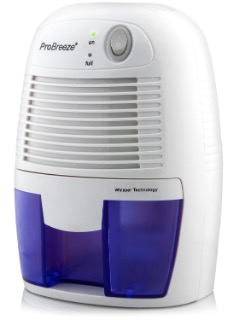
| 🏆 Top Pick for Bathrooms Up to 10m²The Pro Breeze 500ml Mini is a compact Peltier-effect dehumidifier specifically designed for small, enclosed spaces. At under 40dB it runs near-silently, it requires no plumbing, and its small footprint makes it practical in bathrooms where floor space is limited. It’s designed to sit on a windowsill, shelf, or countertop. |
Key Specifications
- Type: Peltier (thermoelectric)
- Extraction: Up to 250ml/day
- Operating temperature: 15°C+ for best performance (Peltier technology)
- Noise level: Under 40 dB
- Tank capacity: 500ml
- Energy use: ~22W
| ⚠️ Temperature note: The Pro Breeze 500ml Mini uses Peltier (thermoelectric) technology rather than a true desiccant rotor. Like compressor units, it works best above 15°C. In a bathroom that drops below this in winter, extraction rate drops noticeably. For a cold or unheated bathroom in winter, the EcoAir DD1 Simple or Meaco DD8L Junior (both true desiccant units working from 1°C) will outperform it. |
For a bathroom that stays reasonably warm — one with underfloor heating, a heated towel rail, or good central heating coverage — the Pro Breeze Mini is ideal. At 22W it costs less than 1p per hour to run and the 500ml tank is sufficient for light use. In a heavily used bathroom with multiple daily showers, you may need to empty it daily.
For a cold bathroom, read on — the EcoAir DD1 Simple is a better fit.
Verdict
The Pro Breeze 500ml Mini is the most practical choice for a small, reasonably warm bathroom. Compact, quiet, and cheap to run. Not suitable for unheated bathrooms in winter — choose a desiccant unit instead.
EcoAir DD1 Simple — Best Budget Desiccant for Bathrooms
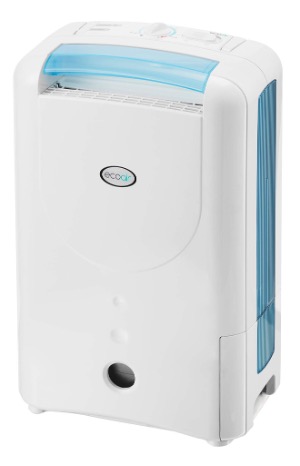
| 🏆 Best for Cold or Unheated BathroomsThe EcoAir DD1 Simple is a true desiccant dehumidifier that works reliably from 1°C — making it the right choice for any bathroom that gets cold in winter. At 34dB it’s one of the quietest desiccant units available, and at 7.5 litres/day extraction capacity it handles even a heavily used bathroom comfortably. |
Key Specifications
- Type: Desiccant
- Extraction: 7.5 litres/day
- Operating temperature: 1°C minimum
- Noise level: 34 dB
- Energy use: ~650W
| ⚠️ Ioniser Warning: The EcoAir DD1 Simple includes a built-in ioniser. Switch it off on first use — ionisers can produce trace ozone and are not recommended for enclosed spaces or anyone with respiratory conditions. The unit performs perfectly without it. |
The EcoAir DD1 Simple’s 7.5 litre/day extraction rate is significantly more than a small bathroom strictly requires — but this headroom means the unit doesn’t have to work hard to keep bathroom humidity under control. In auto mode, it will run briefly after showering and switch off once target humidity is reached, making it energy-efficient in practice despite its 650W rating.
It’s larger than the Pro Breeze Mini and will need floor space rather than a shelf. For a bathroom with space for a floor-standing unit, this is the most capable and cold-weather-reliable option at this price point.
Verdict
The EcoAir DD1 Simple is the best budget desiccant option for a cold UK bathroom. Works from 1°C, extremely quiet at 34dB, and more than capable enough for the space. Disable the ioniser on setup.
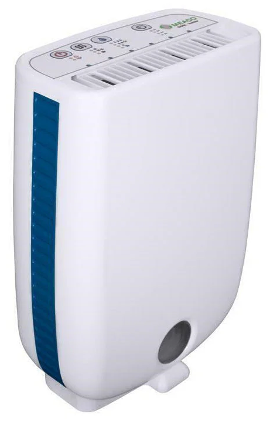
Meaco DD8L Junior — Best Premium Desiccant for Bathrooms
Key Specifications
- Type: Desiccant
- Extraction: 8 litres/day
- Operating temperature: 1°C minimum
- Noise level: 39 dB
- Energy use: ~650W
If you want the best desiccant dehumidifier for a bathroom without compromise, the Meaco DD8L Junior is it. Meaco is a British brand that designs specifically for UK damp conditions, and the DD8L Junior reflects that pedigree. It works from 1°C, extracts up to 8 litres/day, and has no ioniser — making it a cleaner choice for enclosed bathroom use than the EcoAir.
It runs at 39dB — slightly louder than the EcoAir’s 34dB, though still quiet by desiccant standards. The build quality and reliability are generally considered a step above budget alternatives, and Meaco’s customer support and warranty coverage are consistently well regarded.
Like the EcoAir, it requires floor space and is better suited to a larger bathroom or en suite than a compact cloakroom. If you’re placing a dehumidifier in the bathroom primarily, the EcoAir’s lower price is hard to argue against. The Meaco makes more sense if you’re buying one unit to serve both the bathroom and an adjacent bedroom or hallway — its build quality justifies the extra cost for whole-home use.
Verdict
The Meaco DD8L Junior is the premium desiccant choice for bathroom use. No ioniser, works from 1°C, and the most reliable build quality in this roundup. Best value if it’s doing double duty beyond the bathroom.
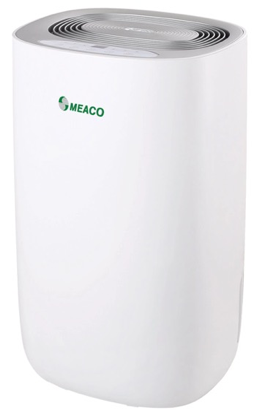
Meaco MeacoDry Abc 12L — For Heated Bathrooms Only
Key Specifications
- Type: Compressor
- Extraction: 12 litres/day
- Operating temperature: 15°C minimum
- Noise level: 35 dB
- Energy use: ~165W
The Meaco MeacoDry Abc 12L is included here specifically for bathrooms that are genuinely well-heated year-round — en suites with underfloor heating, heated towel rails that run continuously, or bathrooms in newer builds with good insulation. In those conditions, it’s the most energy-efficient option in this guide at just 165W versus 650W for the desiccant alternatives.
Do not use this in a cold or unheated bathroom. Below 15°C its performance drops significantly. Below 10°C it barely extracts anything. In a cold UK bathroom from October to April, it will fail to keep up with post-shower humidity spikes and condensation will persist.
Verdict
The Meaco MeacoDry Abc 12L is the right choice if your bathroom genuinely stays above 15°C year-round. More energy-efficient than desiccant in those conditions. For any other bathroom, choose desiccant.
How to Choose the Right Bathroom Dehumidifier
Step 1: Is your bathroom heated?
The single most important question. If your bathroom temperature drops below 15°C at any point in winter — and most UK bathrooms do — you need a desiccant unit. If it stays consistently warm year-round (underfloor heating, always-on heated towel rail), a compressor unit is more economical.
Step 2: How large is your bathroom?
- Under 6m² — a compact unit like the Pro Breeze 500ml Mini (if warm) or the EcoAir DD1 Simple (if cold) is more than sufficient
- 6–15m² — any of the desiccant units in this guide will handle the space comfortably
- Large bathroom or en suite above 15m² — the Meaco DD8L Junior or Abc 12L (if heated) give you appropriate capacity headroom
Step 3: Do you want continuous drainage?
Most dehumidifiers include a gravity drain hose outlet. Connect a standard hose to the drain port and route it to the toilet, sink, or shower drain, and you never need to empty the tank manually. In a bathroom, where the drain is always nearby, this is straightforward to set up and makes the unit genuinely maintenance-free. Check that the model you choose includes a drain hose outlet — all the desiccant models in this guide do.
Step 4: Consider noise
Bathrooms are often used early in the morning or late at night. If the unit will run while others are sleeping nearby, noise matters. The EcoAir DD1 Simple at 34dB is the quietest desiccant option here. The Pro Breeze Mini at under 40dB is also very quiet for its type.
Frequently Asked Questions
Should I use a dehumidifier or extractor fan in my bathroom?
Both, ideally. An extractor fan is the first line of defence — it removes humid air during and immediately after showering and is cheaper to install and run than a dehumidifier. If you already have an extractor fan but still have persistent condensation or mould, add a dehumidifier to manage background humidity. A humidistat-controlled extractor fan (one that triggers automatically when humidity rises) combined with a small desiccant dehumidifier running overnight is the most effective combination for a damp UK bathroom.
Is it safe to use a dehumidifier in a bathroom?
Yes, provided you follow UK bathroom electrical zone rules (BS 7671). Standard dehumidifiers must be positioned outside Zone 2 — at least 60cm from the bath, shower, or any tap. They should be plugged into a standard socket outside the bathroom where possible, or a shaver socket if inside (though these typically can’t power a full dehumidifier). Never use an extension lead in a bathroom. The safest placement is just outside the bathroom door with the door left ajar, or in the bathroom itself well away from water sources.
How long should I run a dehumidifier after a shower?
Run it until relative humidity drops below 60% RH — typically 30–90 minutes after showering depending on bathroom size, ventilation, and temperature. A unit with a built-in humidistat will handle this automatically: set the target to 55% RH and let it cycle off when the room recovers. Running it continuously overnight at the same setting maintains low background humidity and prevents mould growth in grout, silicone, and wall surfaces.
Why does my bathroom get mould even with an extractor fan?
An extractor fan removes humid air during the shower event, but if it switches off shortly after use (or if it’s undersized for the room), residual moisture remains. Moisture that has already absorbed into walls, grout, and ceiling paint continues to off-gas slowly after the fan stops. A dehumidifier running overnight catches this residual moisture before it deposits on cold surfaces. Also check your extractor fan is actually venting outside — some older fans simply recirculate air rather than exhausting it, which does almost nothing for humidity.
What humidity level should a bathroom be?
Target 50–60% relative humidity as your steady-state level. Immediately after showering, humidity will spike to 80–100% — that’s normal and unavoidable. The goal is to bring it back down to below 60% within an hour and keep it there. Above 60% sustained humidity, mould spores germinate and grout and silicone begin to degrade. A hygrometer (available for £10–£15) will confirm your actual levels and show whether your ventilation and dehumidification is working.
Can I use a dehumidifier to dry towels in a bathroom?
Yes — desiccant dehumidifiers in particular produce warm exhaust air that accelerates drying. Position the unit near (but not under) a towel rail or hanging towels, and they will dry significantly faster than in still air. The moisture extracted from the towels goes into the tank rather than back into the room, which is far more effective than simply leaving wet towels hanging in a humid bathroom. This is one of the most practical uses of a bathroom dehumidifier beyond mould prevention.

One Comment