
Best Dehumidifier for Mould UK 2026: Prevention, Not Just Treatment
| Disclosure: This page contains affiliate links. If you buy through these links, we may earn a small commission at no extra cost to you. See our Affiliate Disclaimer for more information. |
The best dehumidifier for mould UK homes can rely on works by removing the one thing mould cannot live without: moisture. Mould spores are present in virtually every home — the difference between a mould-free home and one with visible growth is humidity. Keep indoor relative humidity consistently below 60% RH and mould cannot take hold. Let it rise above 70% for sustained periods and mould will grow on almost any surface — walls, ceilings, grout, window frames, and soft furnishings.
This guide covers the best dehumidifiers for tackling mould in UK homes, explains when a dehumidifier is and isn’t the right solution, and gives a practical step-by-step treatment approach — not just a product list.
| ✅ Key TakeawaysMould grows when relative humidity exceeds 70% for sustained periods — keeping indoor humidity consistently below 60% RH is the single most effective long-term prevention strategy. A dehumidifier removes the moisture mould needs to survive and spread, but it will not kill or remove existing mould on surfaces. Always clean visible mould first, then run a dehumidifier to prevent regrowth. Desiccant dehumidifiers work from 1°C and are the correct choice for most UK homes — especially bedrooms, bathrooms, and any unheated room where mould typically appears in autumn and winter. The Meaco DD8L Junior (8 litres/day, 39dB, 1°C minimum) is our top pick for mould prevention in most UK rooms. The Meaco MeacoDry Abc 12L (12 litres/day, 165W) suits larger, well-heated spaces. If mould keeps returning despite running a dehumidifier, the underlying cause may be structural — rising damp, penetrating damp, or failed cavity wall insulation — which requires professional assessment. |
| ⚠️ Important: A dehumidifier prevents mould by controlling humidity. It does not kill or remove existing mould. Before running a dehumidifier in a mouldy room, clean all visible mould with an appropriate mould remover. If you skip this step, the mould already present will continue to release spores even as the dehumidifier reduces humidity. |
Quick Comparison: Best Dehumidifiers for Mould UK
| Model | Type | Min Temp | Extraction | Noise | Best For |
| Meaco DD8L Junior | Desiccant | 1°C | 8 L/day | 39 dB | Most UK rooms |
| EcoAir DD1 Simple | Desiccant | 1°C | 7.5 L/day | 34 dB | Budget pick |
| Meaco MeacoDry Abc 12L | Compressor | 15°C+ | 12 L/day | 35 dB | Heated rooms |
| Meaco 20L Low Energy | Compressor | 15°C+ | 20 L/day | 40 dB | Large heated spaces |
Why Humidity Is the Root Cause of Most UK Mould Problems
Mould is a fungus that reproduces via airborne spores present in virtually every home. Spores are harmless until they land on a damp surface and germinate — a process that requires sustained relative humidity above approximately 70% RH at the surface level.
The key phrase is ‘at the surface level’. A room may average 60% RH, but a cold external wall, single-glazed window, or poorly insulated corner can be several degrees cooler than the room air. Warm, humid air hitting that cold surface causes local humidity to spike — sometimes to 90–100% RH right at the wall. This is why mould almost always appears in corners, behind furniture, and around windows rather than in the middle of a well-ventilated surface.
Normal household activity generates 10–15 litres of water vapour daily: cooking produces around 3 litres, bathing 1–2 litres, and each person adds 1–2 litres through respiration. In a poorly ventilated home, this accumulates rapidly.
According to the NHS, damp and mould can cause or worsen respiratory infections, allergies, and asthma. Asthma + Lung UK specifically identifies mould spore exposure as a significant asthma trigger, particularly in children.
| ℹ️ When a dehumidifier alone is not enough: If mould returns consistently in the same spot despite sustained low humidity, the problem may be structural — rising damp, penetrating damp, or cold bridging from poor insulation. These require professional assessment. A dehumidifier manages condensation damp effectively but cannot fix structural water ingress. |
How to Treat a Mould Problem: Step by Step
Running a dehumidifier into a mouldy room without addressing the visible mould first is ineffective. Here is the correct sequence:
- Identify the extent. Check all corners, behind furniture, inside wardrobes, around window frames, and on external walls. Mould often spreads behind furniture before it becomes visible.
- Ventilate first. Open windows and wear an FFP2 mask before disturbing mould — cleaning releases spores into the air.
- Clean the mould. Use a diluted bleach solution (1 part bleach to 4 parts water) or a proprietary mould remover. Scrub surfaces thoroughly and allow to dry completely. Porous surfaces like painted plaster may need treating twice.
- Allow to dry fully. Run the dehumidifier and keep windows open where practical for 24–48 hours before redecorating or replacing furniture against walls.
- Run the dehumidifier continuously. Set to 50–55% RH target. Expect 2–4 weeks of sustained operation before the room reaches stable low humidity, as moisture absorbed into walls and furnishings takes time to draw out.
- Move furniture away from external walls. A 5–10cm gap allows air circulation and prevents cold-surface condensation — one of the most common mould triggers in UK bedrooms.
Meaco DD8L Junior — Best Overall for Mould Prevention
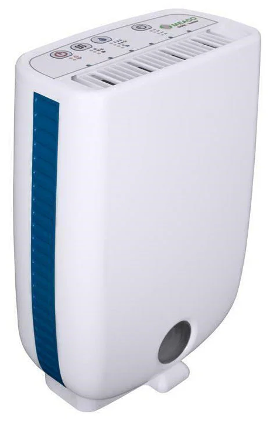
| 🏆 Top Pick for Most UK RoomsThe Meaco DD8L Junior is our top recommendation for mould prevention in most UK homes. It works from 1°C — critical for UK bedrooms and living rooms that cool significantly in winter — extracts up to 8 litres/day, and runs at 39dB. As a British brand designing specifically for UK damp conditions, Meaco builds units calibrated for the climate and housing stock where mould is most problematic. |
Key Specifications
- Type: Desiccant
- Extraction: 8 litres/day
- Operating temperature: 1°C minimum
- Noise level: 39 dB
- Energy use: ~650W
- Ioniser: No
For mould prevention, the DD8L Junior’s desiccant technology is the right fit because mould is most likely to appear in autumn and winter — precisely when temperatures drop and compressor dehumidifiers lose effectiveness. The unit also outputs warm air typically 5–10°C warmer than the room intake, which slightly raises the surface temperature of walls — reducing the condensation differential that drives mould growth in corners.
At 39dB it’s quiet enough to run overnight in a bedroom — the room most commonly affected by mould in UK homes due to overnight respiration adding moisture to a closed, cool space.
Verdict
The Meaco DD8L Junior is the most reliable mould-prevention dehumidifier for most UK rooms. Works year-round from 1°C, quiet enough for bedroom use, no ioniser.
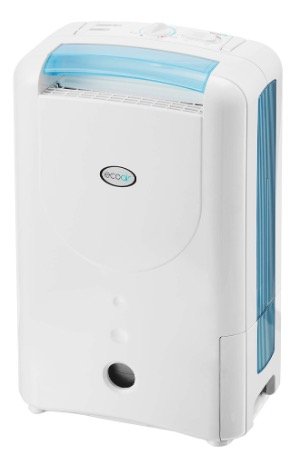
EcoAir DD1 Simple — Best Budget Option for Mould Prevention
Key Specifications
- Type: Desiccant
- Extraction: 7.5 litres/day
- Operating temperature: 1°C minimum
- Noise level: 34 dB
- Energy use: ~650W
The EcoAir DD1 Simple is the budget alternative that doesn’t compromise on the specs that matter for mould prevention. It works from 1°C, extracts 7.5 litres/day, and at 34dB it’s actually quieter than the Meaco DD8L Junior. For a bedroom or small living room with a mould problem, it does everything required at a lower price point.
| ⚠️ Ioniser Warning: The EcoAir DD1 Simple includes a built-in ioniser. Switch it off before first use. Ionisers produce trace ozone — a respiratory irritant counterproductive in a room already affecting air quality through mould spores. The unit works perfectly without it. |
Verdict
The EcoAir DD1 Simple is the best-value desiccant dehumidifier for mould prevention. Quieter than the Meaco, works from 1°C, and priced accessibly. Disable the ioniser on first use.
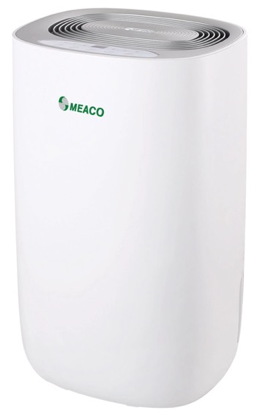
Meaco MeacoDry Abc 12L — For Heated Rooms and Larger Spaces
Key Specifications
- Type: Compressor
- Extraction: 12 litres/day
- Operating temperature: 15°C minimum
- Noise level: 35 dB
- Energy use: ~165W
In a well-heated home where temperatures stay consistently above 15°C through winter, the Meaco MeacoDry Abc 12L offers significantly lower running costs than any desiccant unit. At 165W versus 650W, it costs roughly four times less per hour to run — a meaningful difference for a unit running 8+ hours daily through the damp season.
The critical caveat: if your heating goes off overnight, or if any rooms drop below 15°C at any point, the Abc 12L’s performance degrades rapidly. For most UK homes, desiccant is the safer choice.
Verdict
The Meaco MeacoDry Abc 12L is the most economical choice for mould prevention in consistently heated UK homes. If you’re unsure whether your home stays above 15°C, choose desiccant.
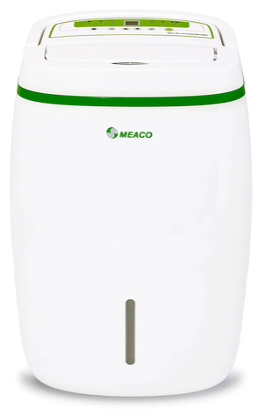
Meaco 20L Low Energy — For Large Heated Spaces
Key Specifications
- Type: Compressor
- Extraction: 20 litres/day
- Operating temperature: 15°C minimum
- Noise level: 40 dB
- Energy use: ~205W
The Meaco 20L Low Energy is the choice for larger homes — 3 or 4-bedroom properties, or open-plan spaces above 50m² — where a single high-capacity unit is preferable to multiple smaller ones. At 20 litres/day and 205W it combines serious extraction with reasonable running costs for continuous operation. Like the Abc 12L, it requires sustained temperatures above 15°C.
Verdict
The Meaco 20L Low Energy is the right choice for large, well-heated homes where mould prevention requires high extraction capacity. Not suitable for cool or unheated rooms.
Which Dehumidifier for Which Room?
Bedroom
The bedroom is the most common site of mould in UK homes — overnight respiration in a closed, cool room generates significant moisture. The Meaco DD8L Junior at 39dB or the EcoAir DD1 Simple at 34dB are both appropriate for overnight use. Move beds and wardrobes at least 5–10cm from external walls to allow air circulation.
Bathroom
Bathrooms need a compact unit handling sudden post-shower humidity spikes. A desiccant unit working from 1°C is essential for unheated bathrooms. See our dedicated best dehumidifier for a bathroom UK guide for bathroom-specific recommendations including electrical safety zone information.
Living Room
Mould in living rooms typically appears on external walls behind sofas or shelving. If the room stays above 15°C, the Meaco MeacoDry Abc 12L is efficient at 35dB. If temperatures drop, use the Meaco DD8L Junior.
Cellar / Basement
Cellars are typically cold and often affected by rising or penetrating damp rather than condensation damp. A desiccant unit from 1°C is essential. See our best dehumidifier for a cellar UK guide.
Conservatory
Conservatories combine extreme temperature swings with large glass surfaces — ideal conditions for condensation mould. Desiccant only. See our best dehumidifier for a conservatory UK guide.
Frequently Asked Questions
Will a dehumidifier get rid of mould?
A dehumidifier prevents mould growth and stops existing mould from spreading, but will not remove mould already present. Visible mould must be cleaned manually before running a dehumidifier. Once cleaned and humidity maintained below 60% RH, regrowth is effectively prevented. If mould returns to the same spot despite low humidity, the cause is likely structural damp rather than condensation.
What humidity level prevents mould?
Keeping indoor relative humidity consistently below 60% RH prevents most mould from germinating. For additional safety margin — particularly in rooms with temperature extremes — aim for 50–55% RH. Set your dehumidifier target to 55% RH and let it cycle automatically. A £10–£15 plug-in hygrometer will confirm your actual levels — built-in dehumidifier displays are often approximate.
How long does it take a dehumidifier to reduce mould?
A dehumidifier does not reduce existing mould — it prevents new growth. After cleaning visible mould and running the dehumidifier, it typically takes 2–4 weeks of continuous operation for a room to reach stable low humidity, as moisture absorbed into walls and furnishings takes time to draw out. The tank may need emptying more frequently during this initial period.
Can mould come back after using a dehumidifier?
Yes, if the dehumidifier is switched off or humidity rises again. A dehumidifier is a management tool, not a one-time cure. For persistent mould, continuous operation through the damp season — typically October to April in the UK — is necessary. If mould returns immediately after cleaning despite the dehumidifier maintaining low humidity, a damp surveyor should assess the property for rising damp, penetrating damp, or thermal bridging.
Is black mould dangerous?
According to the NHS, exposure to mould can cause or worsen respiratory infections, allergies, and asthma — particularly concerning for children, the elderly, and people with existing respiratory conditions. The death of two-year-old Awaab Ishak from prolonged mould exposure in social housing led directly to new legislation requiring social landlords to address damp and mould urgently. If you have extensive mould on multiple walls or ceilings, professional remediation and a damp survey are warranted.
Should I use a dehumidifier or open windows for mould?
Both, ideally — they serve different functions. Opening windows ventilates the room by exchanging humid indoor air with outdoor air, working best when outdoor air is cooler and drier than inside. A dehumidifier extracts moisture from the room air regardless of outdoor conditions. For winter mould prevention, a dehumidifier is more consistent. In summer, good ventilation combined with a dehumidifier set to 55% RH gives the most complete control.

13 Comments