HEPA vs Carbon Filter UK: Which One Do You Actually Need?
Last updated: 5 September 2026
| Affiliate Disclosure: This page contains affiliate links. If you buy through these links, we may earn a small commission at no extra cost to you. See our Affiliate Disclaimer for more information. |
Key Takeaways |
| ✅ HEPA filters capture solid particles — dust, pollen, pet dander, mould spores, and smoke particles. ✅ Activated carbon filters absorb gases and odours — cooking smells, VOCs, tobacco smoke, and chemical fumes ✅ They target completely different pollutants — one does not replace the other. ✅ Most quality air purifiers combine both filter types in a single unit. ✅ If particles are your main concern (allergies, asthma, dust), prioritise HEPA quality. ✅ If odours or VOCs are your main concern, prioritise the carbon filter weight and quality. ✅ True HEPA captures 99.97% of particles down to 0.3 microns — ‘HEPA-type’ or ‘HEPA-style’ filters are less effective. |
HEPA vs carbon filter is one of the most common questions people ask when buying an air purifier in the UK — and the confusion is understandable. Both are found inside air purifiers, both improve air quality, but they do completely different jobs.
The short answer: HEPA filters capture particles (dust, pollen, pet dander), while carbon filters absorb gases and odours (cooking smells, VOCs, tobacco smoke). You generally need both, which is why most decent air purifiers include them together.
This guide explains what each filter type does, where they overlap, and how to work out which one — or which combination — your home actually needs.
What Is a HEPA Filter?
HEPA stands for High Efficiency Particulate Air. A True HEPA filter is a dense mat of randomly arranged fibres — typically fibreglass — that captures airborne particles through a combination of interception, impaction, and diffusion.
The key specification: True HEPA filters capture at least 99.97% of particles at 0.3 microns in diameter. This is the most penetrating particle size — the hardest to capture — so anything larger or smaller is caught even more effectively.
What Does a HEPA Filter Remove?
A True HEPA filter captures:
• Dust and dust mite debris
• Pollen (typically 10–100 microns — well within HEPA range)
• Pet dander and hair
• Mould spores
• Bacteria (most are 1–10 microns)
• Fine smoke particles
• Construction dust and particulates
• Some viruses (when clumped or attached to larger particles)
What a HEPA Filter Cannot Remove
A HEPA filter cannot capture gases, vapours, or odour molecules — these are too small to be physically intercepted by the fibres. This is where activated carbon comes in.
| ⚠️ Watch Out For: HEPA-Type Filters |
| True HEPA vs HEPA-type: ‘True HEPA’ meets the 99.97% at 0.3 micron standard. ‘HEPA-type’, ‘HEPA-style’, or ‘HEPA-like’ filters are unregulated marketing terms — they may capture 85–95% of particles at best. Always check for True HEPA certification when buying. |
What Is an Activated Carbon Filter?
Activated carbon (also called activated charcoal) is a form of carbon that has been treated to create an enormous internal surface area — a single gram can have a surface area of over 1,000 square metres. This vast surface traps gas molecules through a process called adsorption (note: adsorption, not absorption — the molecules stick to the surface rather than being soaked up).
Carbon filters are the only practical filter type that can remove gases and odours from the air inside a domestic air purifier.
What Does an Activated Carbon Filter Remove?
• Cooking odours (frying, fish, garlic, spices)
• Tobacco and cannabis smoke odours
• VOCs (volatile organic compounds) from paints, cleaning products, adhesives, and new furniture
• Formaldehyde from carpets, MDF, and building materials
• Pet odours
• Bathroom and bin smells
• Some chemical fumes
What an Activated Carbon Filter Cannot Remove
Carbon filters do not capture solid particles — dust, pollen, dander. A carbon-only filter would leave particles circulating freely. This is why HEPA and carbon are paired together.
Carbon Filter Quality: What to Look For
Not all carbon filters are equal. Budget air purifiers often include a thin mesh pre-filter lightly coated with carbon powder — this provides minimal odour control. Quality units use a dedicated carbon filter layer with a meaningful weight of activated carbon (typically 100g or more).
| The weight of activated carbon matters. A thin carbon mesh offers minimal VOC control — look for units with a dedicated, substantial carbon layer. This spec is rarely listed prominently, but you can usually find it in the product manual or manufacturer spec sheet. |
HEPA vs Carbon Filter: Side-by-Side Comparison
| HEPA Filter | Activated Carbon Filter | |
| What it removes | Particles (dust, pollen, dander, mould, smoke particles) | Gases, VOCs, and odours |
| How it works | Physical interception of particles in dense fibre mat | Adsorption of gas molecules onto carbon surface |
| Smallest particle captured | 0.3 microns (99.97%) — True HEPA | N/A — targets molecules, not particles |
| Removes odours? | No | Yes |
| Removes allergens? | Yes | No |
| Removes VOCs? | No | Yes (partially — depends on carbon weight) |
| Filter lifespan | Typically 12 months | Typically 6–12 months (saturates faster with heavy odour load) |
| Replacement cost | £15–£40 depending on unit | £10–£30 depending on unit |
| Can it be washed? | No — damages the fibres | Some pre-filters yes; carbon layer no |
Do You Need Both HEPA and Carbon?
For most UK homes: yes. The two filter types target entirely different pollutants and complement each other well. This is why virtually every quality air purifier includes both — a HEPA layer for particles and a carbon layer for gases and odours.
Where you might prioritise one over the other:
Prioritise HEPA quality if…
• You have allergies or hay fever — pollen and dust are your primary concern
• You have asthma — fine particles are the main trigger
• You have pets — dander is a particle that HEPA captures well
• You live near a busy road — PM2.5 pollution is a particle problem
• You’re concerned about mould spores
Prioritise carbon quality if…
• You cook frequently and want to control kitchen odours
• You have new furniture, carpets, or have recently decorated — VOC off-gassing is highest in the first months
• Someone in the household smokes
• You’re sensitive to chemical smells from cleaning products
• You keep pets and the smell is as much a concern as the allergens
| Allergy & Asthma Priority |
| For allergy and asthma sufferers: HEPA quality is the non-negotiable. Ensure you’re buying a unit with True HEPA (not HEPA-type) and a CADR rating appropriate for your room size. Carbon is a useful bonus but won’t affect your allergic response. |
Best UK Air Purifiers with Both HEPA and Carbon Filters
All of the air purifiers we recommend for UK homes include both True HEPA and activated carbon filtration. Here’s how they compare on filter quality:
Best overall: Levoit Core 300S
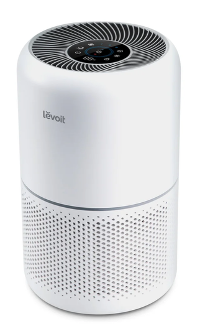
The Levoit Core 300S uses a 3-in-1 filter combining a pre-filter, True HEPA layer, and activated carbon layer in a single replaceable unit. It’s compact, quiet (as low as 24 dB on sleep mode), and well-suited to bedrooms and smaller living rooms up to around 20m². Replacement filters are readily available and reasonably priced.
Step up: Levoit Core 400S
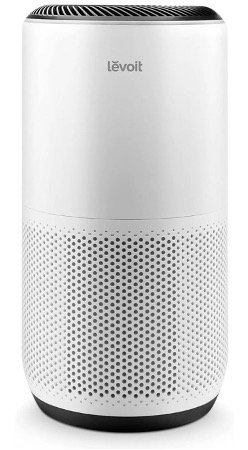
The Levoit Core 400S covers larger rooms (up to ~40m²) with the same True HEPA + carbon combination, plus smart home integration. A strong choice for open-plan living areas.
Large spaces: Levoit Core 600S
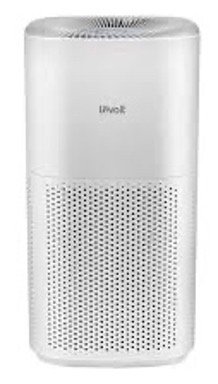
The Levoit Core 600S handles rooms up to ~60m² and includes a substantial carbon filter layer — better odour control than many competitors at this price point. Good choice if VOCs and odours are a priority alongside particle filtration.
Best for heavy particle load: Winix 5500-2
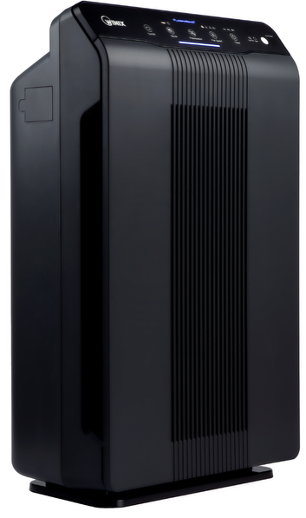
The Winix 5500-2 includes True HEPA, a carbon filter, and Winix’s PlasmaWave technology. It’s a strong performer for dust and allergens in medium-to-large rooms. Note: the ioniser (PlasmaWave) can be turned off if preferred.
| ⚠️ Ioniser warning: The Winix 5500-2 includes an ioniser (PlasmaWave) which is on by default. Ionisers can produce trace ozone. The levels are generally considered safe, but if you’d prefer to avoid ionisation entirely, switch PlasmaWave off in the settings — the HEPA and carbon filtration work independently. |
Best for large rooms and odour control: Blueair Blue Pure 211+
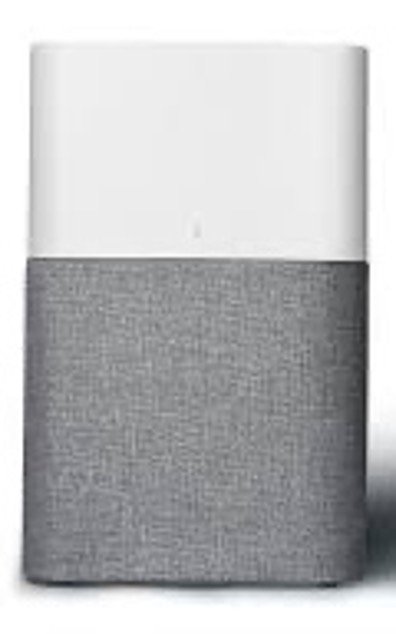
The Blueair Blue Pure 211+ uses a combination particle and carbon filter and covers rooms up to ~50m². Its fabric pre-filter is washable, which extends the life of the main filter. Note: the Blueair 211+ includes a built-in ioniser that cannot be disabled.
| ⚠️ Ioniser warning: The Blueair Blue Pure 211+ has a built-in ioniser that cannot be switched off. For this reason we do not recommend it for nurseries or children’s rooms. In adult spaces it performs well, but if you want ioniser-free filtration, choose the Levoit Core range or Winix A231 instead. |
Ioniser-free option: Winix A231
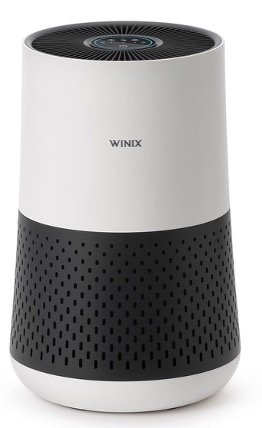
The Winix A231 delivers True HEPA + carbon filtration without an ioniser — a cleaner option for those who want straightforward mechanical filtration only. Well-suited to bedrooms and living rooms.
Filter Comparison: Which Purifiers Use What
| Air Purifier | True HEPA? | Carbon Filter? | Ioniser? | Best For |
| Levoit Core 300S | Yes | Yes | No | Bedrooms, small rooms |
| Levoit Core 400S | Yes | Yes | No | Medium living rooms |
| Levoit Core 600S | Yes | Yes (substantial) | No | Large rooms, odour control |
| Winix 5500-2 | Yes | Yes | Yes (switchable) | Heavy particle load |
| Winix A231 | Yes | Yes | No | Ioniser-free option |
| Blueair Blue Pure 211+ | Yes | Yes | Yes (fixed — cannot disable) | Large rooms, adults only |
| Coway AP-1512HH | Yes | Yes | Yes (switchable) | Compact rooms, value |
| ⚠️ Ioniser note — Coway AP-1512HH: The Coway AP-1512HH ioniser is on by default. Switch it off in settings if you prefer ioniser-free operation. The True HEPA and carbon filtration function independently. |
How Often Do Filters Need Replacing?
Both HEPA and carbon filters are consumables — they need replacing regularly to maintain performance. Running a purifier with a clogged or saturated filter is worse than useless: airflow drops, the motor works harder, and filtration efficiency falls.
HEPA filter lifespan
Typically 10–12 months with daily use. The filter itself doesn’t degrade chemically — it becomes physically clogged with trapped particles. Most air purifiers have a filter replacement indicator. Don’t wash True HEPA filters — this damages the fibre structure and destroys filtration efficiency.
Carbon filter lifespan
Typically 6–12 months, but this varies significantly with use. Carbon filters become saturated when all adsorption sites are occupied. In high-odour environments (heavy cooking, smoking), the carbon can saturate in as little as 3–6 months. The main sign: odours are no longer being absorbed.
Pre-filter lifespan
Many units include a washable pre-filter that captures large particles (hair, large dust) before they reach the HEPA layer. Clean this every 2–4 weeks — it extends the life of the more expensive HEPA filter significantly.
| Running Cost Tip |
| Cost tip: Factor replacement filter costs into your buying decision. A cheaper purifier with expensive or hard-to-source replacement filters often costs more over 3 years than a slightly pricier unit with affordable, readily available filters. Levoit filters are widely available and competitively priced. |
Frequently Asked Questions
Can I use a HEPA filter without carbon?
Yes — HEPA works independently of carbon. If particles (dust, pollen, dander) are your only concern and you have no odour issues, a HEPA-only unit will serve you well. Most quality purifiers include carbon anyway, so it’s rarely a meaningful trade-off.
Can I use a carbon filter without HEPA?
Technically yes, but it’s rarely a good idea. A carbon-only filter does nothing for particles — all the dust, pollen, and dander continues circulating. For general air quality improvement, you need both.
Is HEPA or carbon better for allergies?
HEPA, without question. Allergies are triggered by particles — pollen, dust mite debris, pet dander — all of which True HEPA captures effectively. Carbon filters don’t help with allergic responses. That said, if you’re also sensitive to chemical smells or VOCs, a unit with both is ideal.
Does carbon filter remove PM2.5?
No. PM2.5 (fine particulate matter, 2.5 microns or smaller) is a solid particle — it’s captured by HEPA, not carbon. Carbon targets gas-phase pollutants. For PM2.5 reduction, HEPA is essential.
What is a 3-in-1 filter?
A 3-in-1 filter combines a pre-filter (large particles), True HEPA layer (fine particles), and activated carbon layer (gases and odours) in a single replaceable unit. This is the design used by the Levoit Core 300S and other Levoit models. It simplifies maintenance — one filter to replace rather than three separate components.
Can HEPA filters remove smells?
Not meaningfully. HEPA captures smoke particles, which can reduce the intensity of smoke smells slightly. But odour molecules themselves are gases — far too small to be intercepted by HEPA fibres. For odour control, you need activated carbon.
Do air purifiers remove VOCs?
Activated carbon filters adsorb many VOCs, including formaldehyde, benzene, and other common household chemicals. The effectiveness depends heavily on the weight and quality of the carbon layer. HEPA filters do not remove VOCs.
Quick Decision Guide
| What’s Your Priority? |
| I have allergies or asthma → Prioritise True HEPA. Choose Levoit Core 300S (small room), Core 400S (medium), Core 600S (large). I have pets → Both filters matter. HEPA for dander, carbon for odour. Winix 5500-2 or Levoit Core 400S are strong choices. I cook a lot and want to control kitchen smells → Carbon quality matters. Look for a unit with a substantial dedicated carbon layer — the Levoit Core 600S or Winix 5500-2. I have new furniture or have just decorated → VOC off-gassing is temporary but significant. Any unit with a decent carbon layer will help — run it on high for the first few weeks. I want the simplest option → Levoit Core 300S for small to medium rooms. 3-in-1 filter, no ioniser, easy replacement filters. I want to avoid ionisers entirely → Levoit Core range or Winix A231. Both deliver True HEPA + carbon without any ionisation. |
Related Articles
• Best Air Purifier under £100
Where to Place an Air Purifier — placement tips for maximum filtration
• How Long Does It Take an Air Purifier to Clean a Room? — realistic timelines explained
• Can You Run a Dehumidifier and Air Purifier at the Same Time? — do they complement each other?
• Best Air Purifier for Dust UK — top picks specifically for dust and PM2.5
| About This Article |
| About this article: Written by the UK Air Quality editorial team. We research, test, and independently evaluate air purifiers and related products for UK homes. Our recommendations are based on hands-on assessment and publicly available technical data. Sources and further reading: US EPA — Guide to Air Cleaners in the Home: epa.gov BSI / ISO HEPA filter standards: iso.org CIBSE — Indoor Air Quality guidance: cibse.org UK Health Security Agency — indoor air quality: gov.uk |
