
Where to Place an Air Purifier for Best Results — Room-by-Room UK Guide
Affiliate Disclosure: This page contains affiliate links. If you buy through these links, we may earn a small commission at no extra cost to you. See our Affiliate Disclaimer for more information.
Where to place an air purifier matters more than most buyers realise — the same unit positioned badly can clean a small pocket of air while the rest of the room stays stagnant, while a well-placed unit of the same spec covers the whole space efficiently.
| ✅ Key Takeaways Keep at least 20–30 cm clearance from walls and furniture on all sides — airflow obstruction is the single biggest performance killer. Elevated placement (60–90 cm off the floor) suits most rooms — it puts the intake in the breathing zone and improves light-particle capture. Floor placement is fine for heavy particles like pet dander and dust — many units are designed for it. The bedroom is the highest-priority room — you spend 7–9 hours there breathing the same air. Close doors and windows while the unit is running — purifying an open space wastes filter life. Never place an air purifier flat against a wall — tested airflow drops to as low as 5% versus open placement. |
The Four Universal Rules
These apply regardless of which room, which unit, or which brand you have:
| Rule | Why it matters |
| Clear at least 20 cm on all sides | Intake vents need unobstructed access to pull in air. Testing shows airflow drops to ~5% when a unit is flat against a wall versus open placement. |
| Close doors and windows | An air purifier works best in an enclosed space. Open windows continuously introduce unfiltered outdoor air, making the unit work harder while never achieving clean air. |
| Point clean air output toward where you sit or sleep | Most units draw dirty air in from the sides or base and push clean air out through the top or front. Aim that output toward your breathing zone. |
| Match the unit to the room size | CADR (Clean Air Delivery Rate) must be sufficient for the room volume. A well-placed small unit in a large room still underperforms a correctly sized unit in the same spot. |
Floor vs Elevated: The Honest Answer
This question generates a lot of conflicting advice. Here is what actually matters:
- Floor placement works well for heavier particles — dust, pet dander, and hair that settle at low levels. Most tower-style units are designed for floor use and perform well there.
- Elevated placement (60–90 cm off the ground, on a table, shelf, or nightstand) puts the intake closer to breathing height. This is more effective for lighter airborne particles — pollen, smoke particles, and fine dust that float at head height.
- The wall gap matters far more than the height. Testing by Smart Air across multiple units found airflow dropped to approximately 5% when placed flat against a wall, recovering to 94% with just 4 cm of clearance. Getting the unit away from walls is more important than whether it sits on the floor or a shelf.
For most UK homes: put it where it fits without blocking access to walls and furniture, at whatever height is practical. The clearance rule is non-negotiable; the height is secondary.
Room-by-Room Placement Guide
Bedroom — the highest priority room
You spend roughly a third of your life in the bedroom breathing the same enclosed air. This makes it the single most impactful room for an air purifier, and placement here deserves the most care.
- Ideal position: 1.8–3 metres from the head of the bed, on a nightstand, dresser, or small table at mattress height (60–90 cm). This creates a cross-room airflow pattern that cycles clean air through your breathing zone while you sleep.
- Do not place directly beside your head: Fan noise and direct airflow across the face disrupts sleep. A metre or two of distance is better for both comfort and air quality.
- Near the door: A good secondary option — intercepts incoming allergens (pollen, pet dander) before they circulate through the room.
- Avoid corners: Corners have the lowest air circulation in any room. A unit tucked away behind a bedside table loses a significant fraction of its effective coverage.
| ⚠ Ioniser warning: bedroom use Several popular air purifiers include ionisers that produce trace ozone — a respiratory irritant, especially during the extended overnight exposure of bedroom use. Check your unit before placing it in a bedroom: Winix 5500-2 — has PlasmaWave ioniser. Switch it off for bedroom use via the dedicated button. Winix A231 — has PlasmaWave ioniser. Switch it off for bedroom use. Coway AP-1512HH — ioniser is on by default. Switch it off before using in the bedroom. Blueair Blue Pure 211+ — ioniser cannot be disabled. We do not recommend this unit for bedroom use or for nurseries and children’s rooms. The Levoit Core 300S, Levoit Core 400S, and Levoit Core 600S have no ioniser — safe for unrestricted bedroom use. |
Living Room
The living room is typically the largest space and a high-traffic area — both factors that increase pollutant load from cooking smells, dust, pet dander, and outdoor particles tracked in on clothing and shoes.
- Ideal position: Central to the room or near where you spend the most time sitting. Avoid pushing it behind a sofa or into an alcove — open placement in the main body of the room is far more effective.
- Elevated placement works well here: A side table or console table at 60–90 cm puts the unit at a practical height and away from floor-level obstructions.
- Away from the fireplace or wood burner: Unpredictable air currents from a fire can overwhelm the intake and deposit soot on the filter rapidly, shortening filter life significantly.
- Open-plan spaces: Calculate the combined square footage of the connected area — not just one section of it — and size the unit accordingly. For large open-plan kitchen-diners, position centrally along the longest sightline.
Kitchen
Kitchens generate a unique mixture of pollutants: cooking fumes, VOCs from gas hobs, grease particles, steam, and odours. An air purifier with an activated carbon filter layer is essential here — HEPA alone does not capture gases and odours.
- Position near the cooking source: Placing the unit within 1–2 metres of the hob intercepts pollutants at source before they disperse through the rest of the home.
- Not directly over the hob: Grease and steam will clog the filter rapidly and may damage the unit. Nearby but offset is the right balance.
- Run extractor fan simultaneously: An air purifier and extractor fan work well together — the extractor handles the immediate heavy fume load while the purifier catches what drifts into the wider kitchen.
- Keep away from the sink area: Persistent moisture near the unit accelerates filter degradation and risks electrical issues over time.
Home Office
A home office is typically a smaller, enclosed space — which means a correctly sized unit can clean the air very efficiently. The concern here is VOCs from new furniture, printer toner particles, and general dust.
- On or near the desk: Position the unit at desk height within 1–2 metres of your seated position. Clean air output directed toward your breathing zone is the goal.
- Away from the printer: Printer toner particles are a significant fine-particle pollutant. Placing the purifier between you and the printer intercepts these before they reach your breathing zone.
- Away from electronic devices: Strong electromagnetic fields from some devices can theoretically interfere with some purifier sensors. Keep at least 50 cm separation from computers and monitors as a practical rule.
Hallway — One Unit, Multiple Rooms
If you have a single unit and want to cover the whole home, a hallway placement is often underrated. Air circulates naturally through a house via hallways and landings — positioning a unit here means it processes air that flows between rooms.
- Best for: Homes where the primary concern is allergens tracked in from outside — pollen, pollution particles, and outdoor dust that enter through the front door.
- Limitation: A hallway unit cannot replace room-specific units for targeted bedroom or kitchen use. It is a compromise solution, not an equivalent.
- Practical positioning: Central in the hallway with clearance from walls on both sides. Avoid tucking it under the stairs where airflow is severely restricted.
| ❌ Common placement mistakes to avoid Flat against a wall. Airflow drops to ~5% of rated performance. Always maintain at least 20 cm clearance. In a corner. Corners have the lowest natural air circulation in any room — the worst possible spot for a unit that relies on drawing air in from all sides. Behind furniture. A unit hidden behind a sofa or under a bed is obstructed on multiple sides and will clean a very small localised pocket of air. Next to an open window. The unit will continuously process incoming outdoor air rather than cleaning the room — filter life drops sharply and effectiveness falls. Near a fireplace or wood burner. Unpredictable convection currents and heavy particulate load from combustion rapidly clog filters and can pull soot directly into the unit. In a damp area. Bathrooms and utility rooms with persistent moisture risk filter mould growth and electrical damage. If targeting a damp room, place the unit just outside with the door open rather than inside. |
One Unit or Multiple? The UK Home Context
The honest answer for most UK homes is that one correctly sized unit per priority room outperforms one large unit trying to cover the whole property.
- Period terraces and Victorian conversions: Smaller, compartmentalised rooms with limited airflow between them. A single unit cannot serve multiple closed-off rooms effectively. Prioritise the bedroom first, then the living room.
- Open-plan flats and modern builds: One high-capacity unit placed centrally can cover connected open-plan areas well. Separate bedrooms still benefit from their own unit.
- Moving a single unit between rooms: A practical compromise — use it in the bedroom overnight, move it to the living room or office during the day. This works well if you only need one room clean at any given time.
Recommended Units by Room
Bedroom: Levoit Core 300S
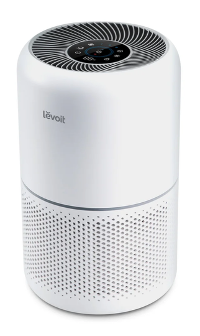
The Levoit Core 300S is our top bedroom pick. Compact enough to sit on a nightstand at the right height, genuinely quiet on sleep mode, no ioniser, and a true HEPA filter. Covers rooms up to approximately 18 m².
| Specification | Detail |
| Coverage | Up to ~18 m² |
| Noise (sleep mode) | 24 dB |
| Filter | True HEPA + activated carbon |
| Ioniser | None — safe for bedroom use |
| Placement | Nightstand or floor beside bed |
Living Room: Levoit Core 400S
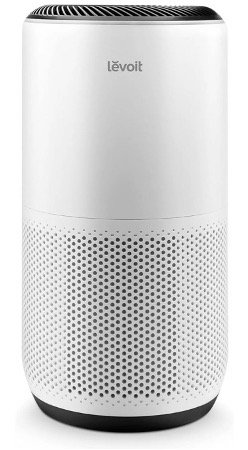
For larger living rooms and open-plan spaces, the Levoit Core 400S steps up the coverage to approximately 40 m² while remaining quiet enough for background use. No ioniser, true HEPA, and smart controls via the VeSync app.
Large Open-Plan Space: Levoit Core 600S or Winix 5500-2
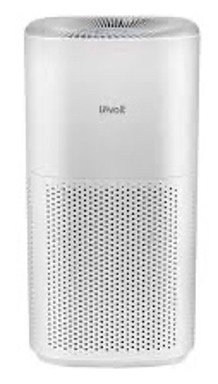
For larger open-plan areas, the Levoit Core 600S covers up to approximately 75 m² and is our first choice.
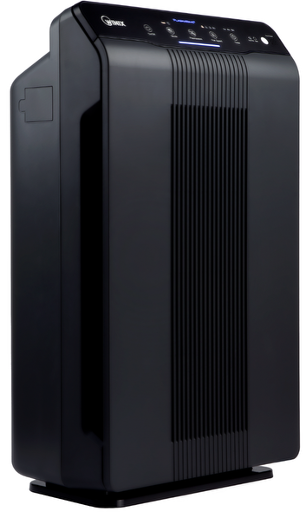
If budget allows the Winix 5500-2 is also an excellent performer — but remember to switch off the PlasmaWave ioniser if placing it in a bedroom or shared sleeping space.
| 🔵 Quick placement verdict The single biggest placement improvement you can make: pull the unit away from the wall. Twenty centimetres of clearance recovers the vast majority of rated airflow. After that — close the door, point the output toward where you sit or sleep, and let it run. Everything else is optimisation. |
Frequently Asked Questions
Should an air purifier be on the floor or on a table?
Both work — the more important factor is wall clearance. Floor placement suits heavier particles like dust and pet dander. Elevated placement at 60–90 cm captures lighter particles at breathing height more effectively. If in doubt, elevated placement is the slightly better all-round choice, but do not sacrifice wall clearance to achieve height.
How far should an air purifier be from the bed?
1.8–3 metres is the recommended range. Close enough that the clean air output reaches your breathing zone, but far enough that fan noise does not disrupt sleep and airflow does not blow directly across your face. A nightstand placement at mattress height on the opposite side of the room from your headboard is the ideal setup.
Can I put an air purifier in the corner of a room?
It will work, but not well. Corners have the lowest natural air circulation in any room — the unit will clean the air immediately around it rather than circulating clean air through the space. If a corner is your only option, point the output toward the centre of the room and accept reduced effectiveness.
Should I close the door when using an air purifier?
Yes. An air purifier works by cycling the air in an enclosed space repeatedly through the filter. Open doors allow air from adjacent rooms to continuously enter, preventing the unit from achieving clean air in the target room. Close the door and let it run — you will see a meaningful difference in how quickly air quality improves.
Can I use one air purifier for the whole house?
Only if it is a very high-capacity unit and your home is open-plan. For a typical UK home with closed-off rooms and a hallway, one unit cannot effectively cover multiple separate rooms. Prioritise the bedroom (where you spend the most time), then the living room. A single unit moved between rooms throughout the day is a reasonable compromise if budget is a constraint.
Does it matter which direction the air purifier faces?
Yes — the clean air output should point toward where you sit or sleep. Most units draw dirty air in from the sides or base and push clean air out through the top or a directional front vent. Check your specific model and orient accordingly. For 360-degree intake units like the Levoit Core series, positioning in an open central location matters more than facing direction.
Can I put an air purifier in the bathroom?
Not recommended as a permanent placement. Persistent moisture in bathrooms risks mould growth on HEPA filters and can cause electrical issues over time. If bathroom odours or mould spores are the concern, place the unit just outside the bathroom door with the door open while it runs.
Related Articles
| Keep Reading Best Air Purifier for Bedroom UK — our top picks specifically selected for bedroom use, with noise figures and ioniser status for every model. Best Air Purifier for Dust UK — if dust is your primary concern, these models and placements are optimised for it. Best Air Purifier for Asthma UK — placement and product advice for asthma sufferers. Best Air Purifier for Hay Fever UK — seasonal positioning tips and the best models for pollen filtration. Winix vs Levoit Air Purifier UK — a head-to-head comparison of the two most popular brands on the site. Best Air Purifier for Mould Spores UK — if damp and mould spores are the concern, placement near the source matters. |
| Sources & About This Page Airflow data referenced from Smart Air independent testing. Ioniser guidance based on manufacturer specifications and published ozone emission data. Room coverage figures sourced from manufacturer CADR ratings. This article was written by the ukairquality.co.uk editorial team and reviewed for accuracy before publication. |

3 Comments