
Does a Dehumidifier Make Your Home Cooler UK? The Honest Answer
Last updated: 18 July 2026
| Affiliate Disclosure This page contains affiliate links. If you buy through these links, we may earn a small commission at no extra cost to you. See our Affiliate Disclaimer for more information. |
“Does a dehumidifier make your home cooler UK” is one of the most-searched questions during a British heatwave — and the honest answer might surprise you. A dehumidifier does not lower the air temperature the way an air conditioner does, but it can make a room feel significantly more comfortable by removing the sticky, heavy moisture that makes heat feel unbearable. Here is what you actually need to know before you switch yours on.
The UK’s housing stock is built to retain heat, which means summer humidity builds up fast indoors. According to the Met Office, relative humidity above 60% significantly increases thermal discomfort — even at moderate temperatures. That is where a dehumidifier earns its place in a hot British summer.
| ✅ Key Takeaways |
| • A dehumidifier does not lower air temperature — but dropping humidity from 70% to 50% can make the same room feel several degrees cooler to your body |
| • Refrigerant (compressor) models such as the Meaco MeacoDry Abc 12L are the right choice in summer — they generate only 1–2°C of waste heat |
| • Desiccant models such as the Meaco DD8L Junior use a heated rotor and produce noticeably more warmth — avoid them during hot weather |
| • Target 50–55% relative humidity for summer comfort. The Met Office links humidity above 60% to significantly increased thermal discomfort |
| • Pairing a dehumidifier with a fan is far more effective than either device alone — the fan circulates the drier air across your skin, accelerating sweat evaporation |
| • The Meaco MeacoDry Abc 12L runs at 36–40 dB and ~149–160W — quiet enough for overnight bedroom use and efficient enough for daily summer operation |
How a Dehumidifier Affects Room Temperature
There are two main types of dehumidifier sold in the UK, and they behave quite differently when it comes to heat.
Refrigerant (Compressor) Dehumidifiers
Refrigerant dehumidifiers — such as the Meaco MeacoDry Abc 12L (36–40 dB, ~149–160W), the Pro Breeze 12L (~200W), and the Meaco 20L Low Energy (~219–255W) — work by drawing warm, moist air over cold coils. Moisture condenses and drips into the tank, and the now-drier air is released back into the room. The catch: that air is also very slightly warmer than it went in, because the compressor generates a small amount of heat as a by-product.
In a large, well-ventilated room you will barely notice this. In a small, sealed bedroom running for several hours, you may detect a 1–2°C rise on the thermometer. However, because relative humidity drops significantly, the perceived temperature — how hot it actually feels to your body — tends to go down. Your sweat can evaporate properly, which is how your body cools itself.
Desiccant Dehumidifiers
Desiccant dehumidifiers — such as the Meaco DD8L Junior — use a heated rotor to absorb moisture rather than cold coils. They are excellent at low temperatures, which makes them the right choice for garages, cellars, and conservatories in winter. But the heating element means they produce noticeably more heat during operation, which makes them a poor choice for already-warm summer rooms.
| ⚠ Summer Tip: Avoid Desiccant Models in Hot Weather |
| Desiccant dehumidifiers such as the Meaco DD8L Junior use a heated rotor that produces noticeably more warmth as a by-product. In an already-hot room this makes them counterproductive during summer. Stick to a refrigerant (compressor) model like the Meaco MeacoDry Abc 12L for heatwave use, and save the desiccant unit for cold, unheated spaces in autumn and winter. |
Will a Dehumidifier Actually Make You Feel Cooler?
Yes — in most cases, and often noticeably so. The science is straightforward: high humidity stops sweat from evaporating off your skin, trapping heat against your body. Even if the thermometer reads the same 28°C, air at 40% humidity feels far more tolerable than air at 75% humidity.
This is the same reason a 35°C day in southern Spain can feel bearable while a 27°C day in a muggy UK summer leaves you struggling to sleep. Temperature alone does not tell the whole story — humidity is the hidden variable.
Running a refrigerant dehumidifier like the Meaco MeacoDry Abc 12L in a bedroom overnight and bringing relative humidity down from 70% to 50–55% can make a meaningful difference to sleep quality, even if the air temperature itself rises fractionally. This is the core distinction: a dehumidifier does not cool the air, but it makes the air easier for your body to cope with.
Refrigerant vs Desiccant in Summer: Quick Comparison
| Feature | Refrigerant — e.g. Meaco Abc 12L | Desiccant — e.g. Meaco DD8L Junior |
| Lowers air temperature? | No — but feels cooler | No |
| Heat output | Very slight (1–2°C) | Moderate — noticeably warmer |
| Best for summer use? | Yes ✅ | No ❌ |
| Works below 15°C? | No ❌ | Yes — to 1°C ✅ |
| Noise level | 36–40 dB (Quiet Mark certified) | 39 dB |
| Power draw | ~149–160W | 300–580W (heated rotor) |
| UK pick | Meaco MeacoDry Abc 12L | Meaco DD8L Junior |
How to Get the Most Comfort From Your Dehumidifier in Summer
- Set your target humidity to 50–55%. This is the sweet spot for summer comfort — dry enough to feel cooler, but not so dry that it causes dry throats or static electricity.
- Use it alongside a fan. A dehumidifier removes moisture; a fan circulates the drier air across your skin. The combination is far more effective than either alone.
- Do not seal the room completely. A small amount of ventilation helps prevent the slight warmth from the compressor building up in very small spaces.
- Avoid desiccant models in summer. The Meaco DD8L Junior and similar desiccant units produce noticeably more heat. Save them for cold, unheated spaces in autumn and winter.
- Empty the tank regularly. During a heatwave the tank fills faster. Check it morning and evening, or use continuous drainage. The Meaco 20L Low Energy has a 6L tank and supports continuous drain, ideal for extended heatwave periods.
- Right-size your unit. The Meaco 20L Low Energy suits larger open-plan spaces; the Meaco MeacoDry Abc 12L or Pro Breeze 12L are ideal for bedrooms and living rooms.
Which Dehumidifier Is Best During a UK Heatwave?
| Model | Type | Extraction | Noise | Power | Good in Summer? | Best For |
| Meaco Abc 12L | Refrigerant | 12L/day | 36–40 dB | ~149W | Yes ✅ | Bedrooms |
| Meaco 20L Low Energy | Refrigerant | 20L/day | ~46 dB | ~219W | Yes ✅ | Larger spaces |
| Pro Breeze 12L | Refrigerant | 12L/day | ≤38 dB | ~200W | Yes ✅ | Budget pick |
| Meaco DD8L Junior | Desiccant | 8L/day | 39 dB | 300–580W | No ❌ | Cold/winter spaces |
| Pro Breeze 500ml Mini | Peltier | ~250ml/day | ≤33 dB | ~20W | Limited | Small enclosed spaces |
Best for Bedrooms: Meaco MeacoDry Abc 12L
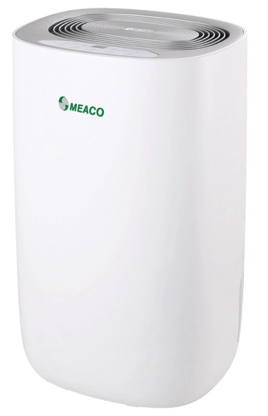
The Meaco MeacoDry Abc 12L is the standout choice for bedrooms during a heatwave. At 36–40 dB it holds Quiet Mark accreditation — independently tested and certified as genuinely unobtrusive. That matters if you need it running overnight. At ~149–160W it is among the more energy-efficient refrigerant dehumidifiers in its class, and its compact footprint means it moves easily between rooms.
| Spec | Detail |
| Type | Refrigerant (compressor) |
| Extraction rate | 12 litres/day |
| Noise level | 36–40 dB (Quiet Mark certified) |
| Power consumption | ~149–160W |
| Tank capacity | 2.6L |
| Running cost | ~4p/hr at 24p/kWh |
| Summer use | Yes — only 1–2°C waste heat |
| Warranty | 3 years |
| ✅ Pros | ❌ Cons |
| Quiet Mark certified at 36–40 dB — genuinely suitable for overnight bedroom use | 2.6L tank needs emptying every 1–2 days during a heatwave |
| Only 1–2°C waste heat — right tool for hot-weather comfort | Not suited to large open-plan spaces — step up to the 20L |
| Compact and easy to move between rooms | Compressor — not effective below 10°C |
| ~4p/hr at 24p/kWh — efficient for daily summer use | |
| 3-year Meaco warranty |
| Our Verdict |
| Meaco MeacoDry Abc 12L — The best all-round summer dehumidifier for a UK bedroom. Quiet, efficient, and barely warm — everything you need for heatwave comfort overnight. |
Best for Larger Spaces: Meaco 20L Low Energy
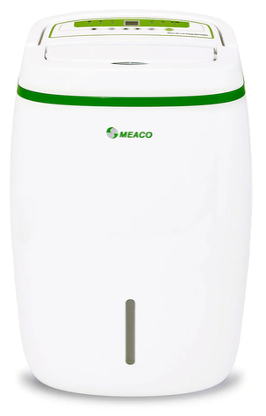
If you are dealing with an open-plan kitchen-diner, large living room, or a house that retains heat badly during a heatwave, the Meaco 20L Low Energy offers considerably more extraction capacity at 20 litres per day. Its Control Logic humidistat means it only runs when needed, limiting unnecessary heat output — important in summer. The 6L tank and continuous drain option make it low-maintenance during a prolonged hot spell. At up to 46 dB it is better suited to living areas than bedrooms.
| Spec | Detail |
| Type | Refrigerant (compressor) |
| Extraction rate | 20 litres/day |
| Noise level | ~44–46 dB |
| Power consumption | ~219–255W |
| Tank capacity | 6L |
| Drain | Continuous drain supported |
| Running cost | ~5p/hr at 24p/kWh |
| Summer use | Yes — suitable for larger spaces |
| Warranty | 3 years |
| ✅ Pros | ❌ Cons |
| 20L/day extraction — suits larger rooms and open-plan spaces | ~44–46 dB — louder than the Abc 12L; less suitable for bedrooms overnight |
| Control Logic limits unnecessary run time and heat build-up | Bulkier and heavier — less portable day-to-day |
| 6L tank + continuous drain — minimal maintenance during a heatwave | Higher upfront cost than the 12L models |
| 3-year Meaco warranty |
| Our Verdict |
| Meaco 20L Low Energy — The right choice for larger rooms and open-plan spaces during a heatwave. Set to 55% RH with continuous drain and leave it to manage humidity across the whole ground floor. |
Best Budget Pick: Pro Breeze 12L
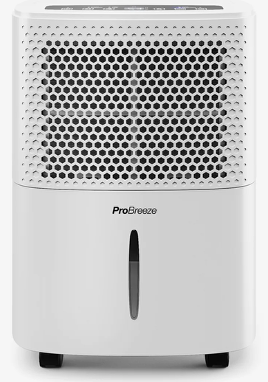
For buyers who want solid heatwave dehumidification without spending a lot, the Pro Breeze 12L delivers dependable performance at a lower price point. A Which? Best Buy award winner, it is rated at ≤38 dB and draws around 200W — approximately 5–6p per hour at 24p/kWh. It lacks some refinements compared to the Meaco Abc, but for occasional heatwave use it gets the job done.
| Spec | Detail |
| Type | Refrigerant (compressor) |
| Extraction rate | 12 litres/day |
| Noise level | ≤38 dB (manufacturer spec) |
| Power consumption | ~200W |
| Tank capacity | 1.8L |
| Award | Which? Best Buy |
| Running cost | ~5–6p/hr at 24p/kWh |
| Summer use | Yes |
| Warranty | 1 year |
| ✅ Pros | ❌ Cons |
| Which? Best Buy — independently verified performance | Not Quiet Mark certified — louder than Meaco Abc in real-world use |
| Lower upfront cost than the Meaco alternatives | 1.8L tank fills quickly during a heatwave |
| 12L/day suits most UK bedrooms and living rooms | 1-year warranty vs 3 years on Meaco models |
| Continuous drain hose included |
| Our Verdict |
| Pro Breeze 12L — A solid budget pick for occasional heatwave use. Which? Best Buy confirms the core performance. If overnight silence matters, budget up to the Meaco Abc 12L. |
What About Mini Dehumidifiers During a Heatwave?
Small Peltier models like the Pro Breeze 500ml Mini are designed for small enclosed spaces — wardrobes, caravans, bathrooms — not for making a room feel cooler during a heatwave. Their extraction capacity (around 250ml per day) is not sufficient to meaningfully reduce humidity in a living space. The Pro Breeze 500ml Mini does run at ≤33 dB and just 20W, making it useful for a wardrobe or small single corner — but not as a primary summer comfort solution.
Frequently Asked Questions
Does a dehumidifier make your home cooler UK?
Not technically — a dehumidifier does not lower the air temperature. But it can make your home feel significantly more comfortable during a UK heatwave by reducing relative humidity. When humidity drops from 70% to 50%, your body’s sweat evaporation works properly again, and the perceived temperature drops noticeably. A refrigerant model like the Meaco MeacoDry Abc 12L is the right tool for this.
Will a dehumidifier lower the temperature in a room?
No — a dehumidifier does not lower the thermometer reading. It removes moisture from the air, which makes the same temperature feel more tolerable. In a small sealed room the compressor may raise the actual air temperature by 1–2°C, but the reduction in humidity more than compensates in terms of comfort. For active temperature reduction you need a portable air conditioner, which vents hot air outside.
Do dehumidifiers cool rooms or just reduce humidity?
Dehumidifiers only reduce humidity — they do not cool rooms in the way an air conditioner does. The comfort improvement comes from the fact that lower humidity makes it easier for your body to regulate its own temperature through sweat evaporation. The room itself is not cooler, but you feel cooler in it.
Does a dehumidifier help in hot weather?
Yes, if the discomfort is caused by sticky, humid air rather than raw temperature. In the UK, summer heatwaves are almost always accompanied by high humidity indoors in poorly ventilated homes. Running a refrigerant dehumidifier like the Meaco MeacoDry Abc 12L or Meaco 20L Low Energy and targeting 50–55% RH makes a real difference to comfort. Pair it with a fan for best results.
Should I run my dehumidifier in summer?
Yes — if your home feels humid and sticky, running a refrigerant dehumidifier is worthwhile. Aim for 50–55% RH. Combine it with a fan for best effect. Avoid running a desiccant model such as the Meaco DD8L Junior in summer if heat is already a problem — the heated rotor adds warmth rather than removing it.
Does a dehumidifier make a bedroom hotter at night?
Very slightly, in a technical sense — the compressor releases a small amount of waste heat (1–2°C). In practice, the reduction in humidity usually more than compensates, making the room feel more comfortable to sleep in. A quiet refrigerant model like the Meaco MeacoDry Abc 12L (36–40 dB, ~149–160W) is well-suited to overnight bedroom use during a heatwave.
What humidity level should I aim for in summer?
Between 40% and 55% is the ideal range for summer comfort. Below 40% can cause dry throats and static; above 60% starts to feel muggy and uncomfortable. A built-in humidistat will manage this automatically once you set a target — 50–55% is the recommended starting point.
Can a dehumidifier replace a fan in a heatwave?
No — they do different jobs. A fan moves air around your body to accelerate sweat evaporation. A dehumidifierreduces the moisture in the air so that evaporation works more efficiently. Used together they are far more effective than either alone — a fan blowing drier air is noticeably more cooling than a fan blowing humid air.
What is the difference between a dehumidifier and a portable air conditioner?
A portable air conditioner actively lowers air temperature by venting hot air outside through a hose — it does both cooling and dehumidifying. A dehumidifier only removes moisture and does not vent heat outside. If your priority is cooling the actual air temperature, see our best portable air conditioner UK guide. If your priority is reducing humidity and improving comfort at a lower cost, a refrigerant dehumidifier is the right tool.
Is it safe to run a dehumidifier all day during a heatwave?
Yes — modern dehumidifiers with auto-humidistats are designed to run continuously when needed. Once the target humidity is reached, the compressor cycles off and the unit idles on minimal power. Make sure the tank does not overfill, or use continuous drainage. The Meaco 20L Low Energy with its 6L tank and continuous drain option is particularly well-suited to extended heatwave operation.
The Verdict
Does a dehumidifier make your home cooler? Not technically — but it can make it feel considerably more bearable during a UK heatwave. By bringing humidity down to the 50–55% range, your body’s natural cooling system works properly again, which makes a real difference even when the thermometer says otherwise.
For most UK homes, the Meaco MeacoDry Abc 12L is the best all-round summer option — quiet at 36–40 dB, efficient at ~149–160W, and compact enough to move between rooms daily. For larger spaces, step up to the Meaco 20L Low Energy. If budget is the priority, the Pro Breeze 12L is a solid entry-level pick. Avoid desiccant models like the Meaco DD8L Junior during hot weather — save those for cold, unheated spaces in autumn and winter.
Related Reading
- Best Dehumidifier for Bedroom UK
- Best Dehumidifier Under £100 UK
- Desiccant vs Compressor Dehumidifier UK
- Best Portable Air Conditioner UK
- Dehumidifier vs Air Purifier UK
- Best Whole House Dehumidifier UK
| About This Article |
| This guide was researched and written by UK Air Quality, drawing on manufacturer specifications and independent test data. External references include Met Office guidance on humidity and thermal comfort and NHS guidance on damp and mould. Running cost estimates use 24p/kWh (Ofgem rate). Affiliate links are included — see disclosure above. Last reviewed: June 2026. |

6 Comments